Blood: Components, Functions, and Its Critical Role in Physical Therapy Recovery
Explore the components and functions of blood — red cells, white cells, platelets, and plasma — and understand how blood supports tissue healing and physical therapy recovery.
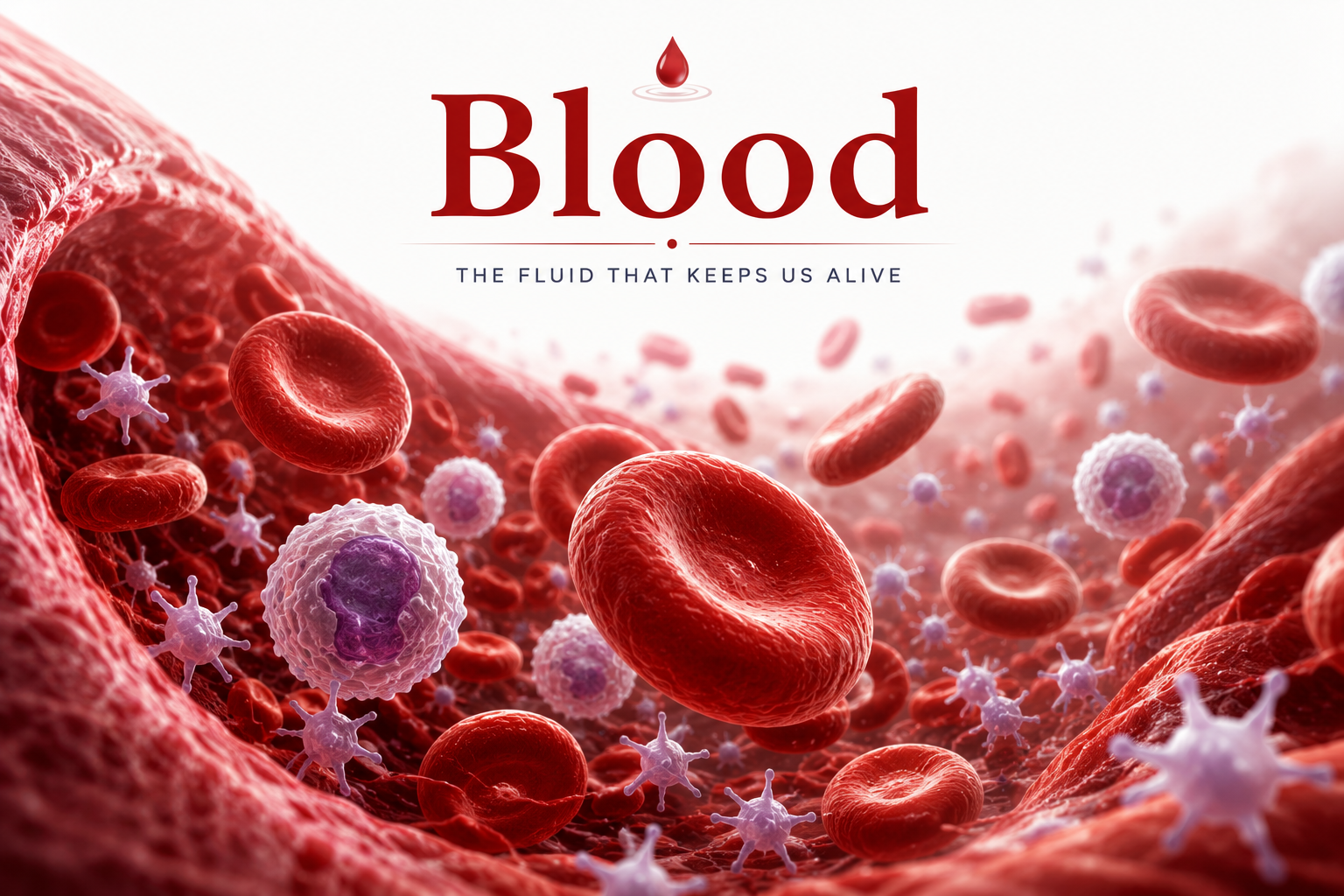
Blood is often thought of simply as the liquid that flows through our veins. But blood is, in fact, a highly sophisticated connective tissue — a fluid matrix that delivers oxygen and nutrients, removes waste products, regulates temperature, defends against infection, and orchestrates the complex biological cascade that heals injuries. Every physical therapy session, every exercise, every moment of recovery depends on the blood doing its job.
For physical therapy patients and practitioners, understanding blood physiology provides insight into why cardiovascular fitness matters in rehabilitation, how the body responds to injury, and why interventions like exercise and manual therapy can accelerate healing.
Blood as a Connective Tissue
Blood belongs to the connective tissue family. Like all connective tissues, it consists of cells suspended in an extracellular matrix — in this case, a fluid matrix called plasma. Blood is classified as a specialized fluid connective tissue because its matrix is liquid rather than solid or gel-like.
The average adult human body contains approximately 5 liters of blood. Blood makes up about 7-8% of total body weight. It flows continuously through a closed circuit of blood vessels — arteries, capillaries, and veins — driven by the pumping action of the heart.
Components of Blood
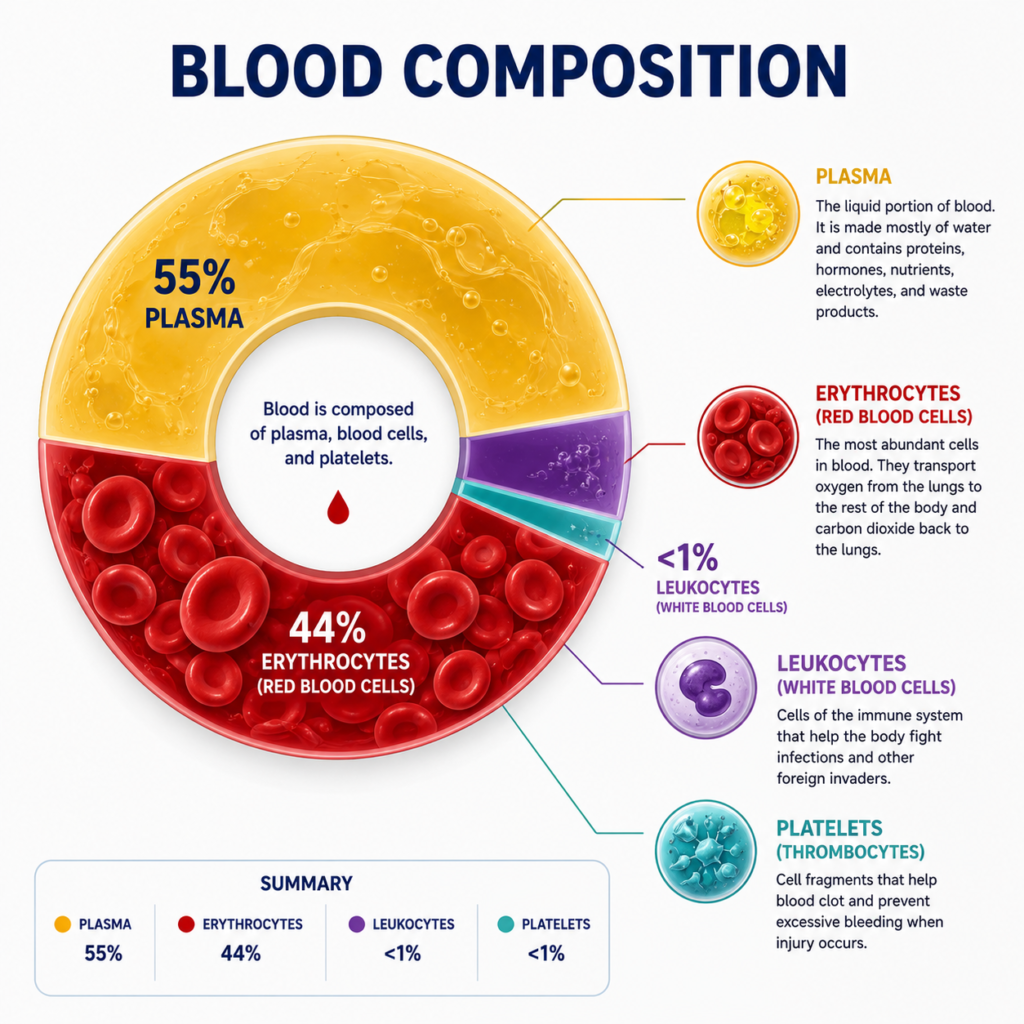
Blood has four main components: red blood cells, white blood cells, platelets, and plasma.
Red Blood Cells (Erythrocytes)
Red blood cells (RBCs) are the most numerous cells in blood, with approximately 4.5 to 5.5 million per microliter. They are unique among human cells in that mature RBCs lack a nucleus and most organelles — a sacrifice made to maximize their oxygen-carrying capacity.
RBCs are packed with hemoglobin — a protein that contains iron and binds oxygen. Each hemoglobin molecule can carry four oxygen molecules. As blood passes through the lungs, hemoglobin binds oxygen and transports it to tissues throughout the body. In tissues, where oxygen concentration is lower, hemoglobin releases its oxygen for use in cellular respiration.
For physical therapy, RBC count and hemoglobin levels are directly relevant to exercise capacity. Anemia (low hemoglobin) reduces the blood’s oxygen-carrying capacity, causing fatigue, reduced exercise tolerance, and slower recovery. Patients with anemia — common after surgery, major injury, or in certain chronic conditions — may require modified rehabilitation programs until blood counts normalize.
Aerobic exercise itself stimulates erythropoiesis (RBC production) by increasing erythropoietin (EPO) secretion from the kidneys. This is one way that cardiovascular training improves aerobic capacity over time.
White Blood Cells (Leukocytes)
White blood cells are the soldiers of the immune system. They are far less numerous than RBCs — approximately 4,500 to 11,000 per microliter in healthy adults — but they play a critical role in defending the body against infection and orchestrating the response to injury.
White blood cells are classified into several types:
- Neutrophils are the first responders to infection and injury, rapidly migrating to sites of damage to engulf bacteria and cellular debris.
- Monocytes/Macrophages are powerful phagocytes that arrive later, clearing debris and releasing signaling molecules (cytokines) that coordinate the healing response.
- Lymphocytes (T cells and B cells) are central to the adaptive immune response — the more specific, memory-based defense system.
- Eosinophils and basophils are involved in allergic responses and parasitic infection.
In physical therapy, the behavior of white blood cells is directly relevant during the inflammatory phase of tissue healing. The recruitment of neutrophils and macrophages to an injured area drives the classic signs of inflammation (redness, heat, swelling, pain) but is also essential for clearing damaged tissue and initiating repair. Understanding this explains why completely suppressing inflammation immediately after injury — such as with aggressive icing or large doses of anti-inflammatory drugs in the first days — may actually slow healing by interfering with normal leukocyte activity.
Platelets (Thrombocytes)
Platelets are small, non-nucleated cell fragments produced by large bone marrow cells called megakaryocytes. The normal platelet count is 150,000 to 400,000 per microliter.
Platelets are essential for hemostasis — the process of stopping bleeding after vessel damage. When a blood vessel is injured, platelets adhere to the exposed collagen in the vessel wall, become activated, and aggregate to form a platelet plug. They also release clotting factors that initiate the coagulation cascade, ultimately producing fibrin — the structural protein of a blood clot.
Beyond hemostasis, platelets release a rich array of growth factors including platelet-derived growth factor (PDGF), transforming growth factor-beta (TGF-β), and vascular endothelial growth factor (VEGF). These growth factors are powerful stimulators of tissue repair — they signal fibroblasts to produce collagen, stimulate angiogenesis (new blood vessel formation), and regulate the inflammatory response.
This is the scientific basis for platelet-rich plasma (PRP) therapy — a treatment sometimes used alongside physical therapy — which concentrates platelets from the patient’s own blood and injects them into injured tissue to amplify the natural healing response.
Plasma
Plasma is the liquid component of blood — a pale yellow fluid that makes up approximately 55% of blood volume. It is composed of about 90% water plus dissolved proteins, hormones, nutrients, gases, and waste products.
Key plasma proteins include:
- Albumin: Maintains osmotic pressure (preventing fluid from leaking excessively out of blood vessels) and acts as a carrier for many substances.
- Fibrinogen: The precursor to fibrin, essential for blood clotting.
- Immunoglobulins (antibodies): Proteins produced by B lymphocytes that neutralize pathogens.
- Clotting factors: A cascade of proteins that regulate blood coagulation.
Plasma also carries hormones — including cortisol, insulin, testosterone, and growth hormone — that have profound effects on muscle metabolism, tissue repair, and the body’s response to therapeutic exercise.
Blood Flow and Physical Therapy
One of the most direct ways physical therapy interventions improve outcomes is by enhancing blood flow to injured tissues. Adequate blood flow is essential for healing because it delivers the oxygen, nutrients, hormones, growth factors, and immune cells that tissues need to repair.
Exercise is the most powerful stimulus for increasing blood flow in both local muscle and systemically. During exercise, cardiac output increases, local vasodilation occurs in active muscles, and blood is redistributed from less active areas. In rehabilitation, even gentle active exercise significantly increases blood flow to injured tissues compared to complete rest.
Manual therapy techniques — including soft tissue massage, joint mobilization, and myofascial release — also influence local blood flow through mechanical compression and release of vessels and by stimulating the release of vasoactive substances from endothelial cells.
Heat application (thermotherapy) causes vasodilation and increases blood flow. Cold application (cryotherapy) causes initial vasoconstriction followed by reactive hyperemia — a rebound increase in blood flow after the cold is removed. Both modalities are used strategically in physical therapy to manage inflammation and promote healing.
Conclusion
Blood is the body’s master transport and communication system — carrying the oxygen that fuels cellular energy, the nutrients that build new tissue, the immune cells that defend against infection, the growth factors that coordinate repair, and the hormones that regulate every aspect of recovery. Physical therapy works, in part, by optimizing the blood’s ability to do all of these jobs.
Whether through exercise that increases cardiac output, manual techniques that improve local circulation, or education that reduces stress hormones that impair healing, every aspect of physical therapy supports the cardiovascular system’s role in recovery. Blood truly is the lifeblood of rehabilitation.
References
- Ross, M.H., & Pawlina, W. (2020). Histology: A Text and Atlas (8th ed.). Wolters Kluwer.
- Mescher, A.L. (2021). Junqueira’s Basic Histology: Text and Atlas (16th ed.). McGraw-Hill.
Disclaimer: This article is for educational purposes only and does not constitute medical advice. Always consult a qualified healthcare professional for personal health concerns.
The site is written and curated by Paul Morgan, a graduate in Physiotherapy (2026), with a particular interest in cardiorespiratory and musculoskeletal physical therapy. Every article on this site is grounded in academic physiology and physical therapy coursework. Content reviewed for clinical accuracy before publishing.