Enzymes: The Body’s Biological Catalysts and Their Role in Injury and Healing
Learn what enzymes are, how they accelerate biological reactions, and how enzyme activity relates to muscle injury, inflammation, and physical therapy recovery.
Without enzymes, life as we know it would be impossible. The chemical reactions required to sustain life — from digesting food to building muscle proteins to generating energy for movement — would occur far too slowly to support biological function. Enzymes are the biological catalysts that accelerate these reactions, making them thousands to millions of times faster without being consumed in the process.
Understanding enzymes helps explain much of the biology underlying physical therapy: why muscles produce certain markers after injury, how anti-inflammatory drugs work, why temperature and pH affect performance and recovery, and how the body orchestrates the complex chemistry of healing.
What Are Enzymes?
Enzymes are proteins (and, in some cases, RNA molecules called ribozymes) that act as biological catalysts. A catalyst is a substance that accelerates a chemical reaction without itself being permanently changed or consumed.
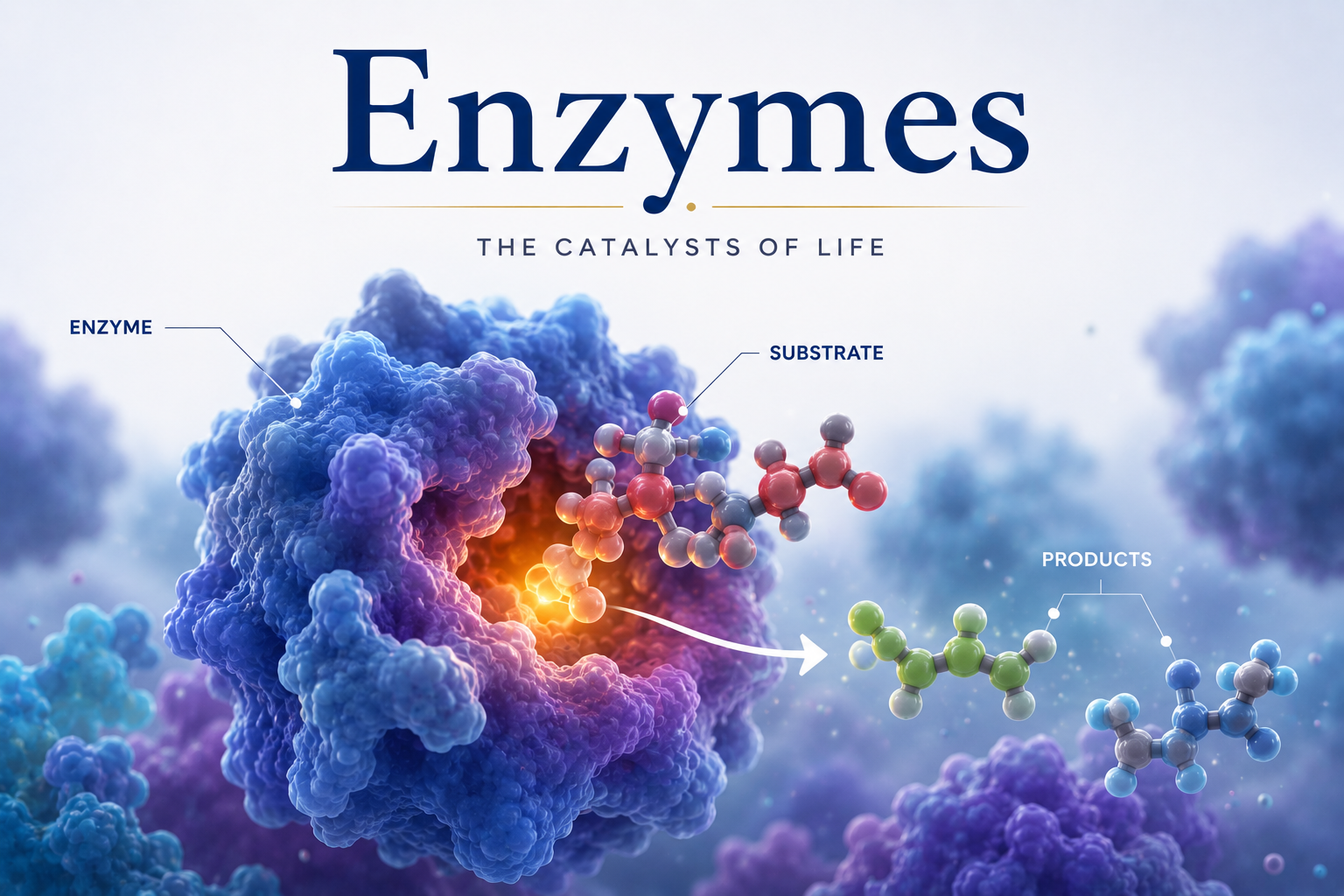
Every enzyme is highly specific — it catalyzes one particular reaction or a small group of closely related reactions. This specificity arises from the enzyme’s three-dimensional structure. Each enzyme has an active site — a precisely shaped region where the substrate (the molecule the enzyme acts upon) binds. The shape of the active site is complementary to the shape of the substrate, like a lock and key (though modern understanding describes a more flexible “induced fit” where both enzyme and substrate adjust their shapes upon binding).
Once the substrate binds to the active site, the enzyme facilitates the reaction, converts the substrate into the product, and then releases the product — ready to catalyze another reaction. A single enzyme molecule can catalyze millions of reactions per minute.
How Enzymes Work: Lowering Activation Energy
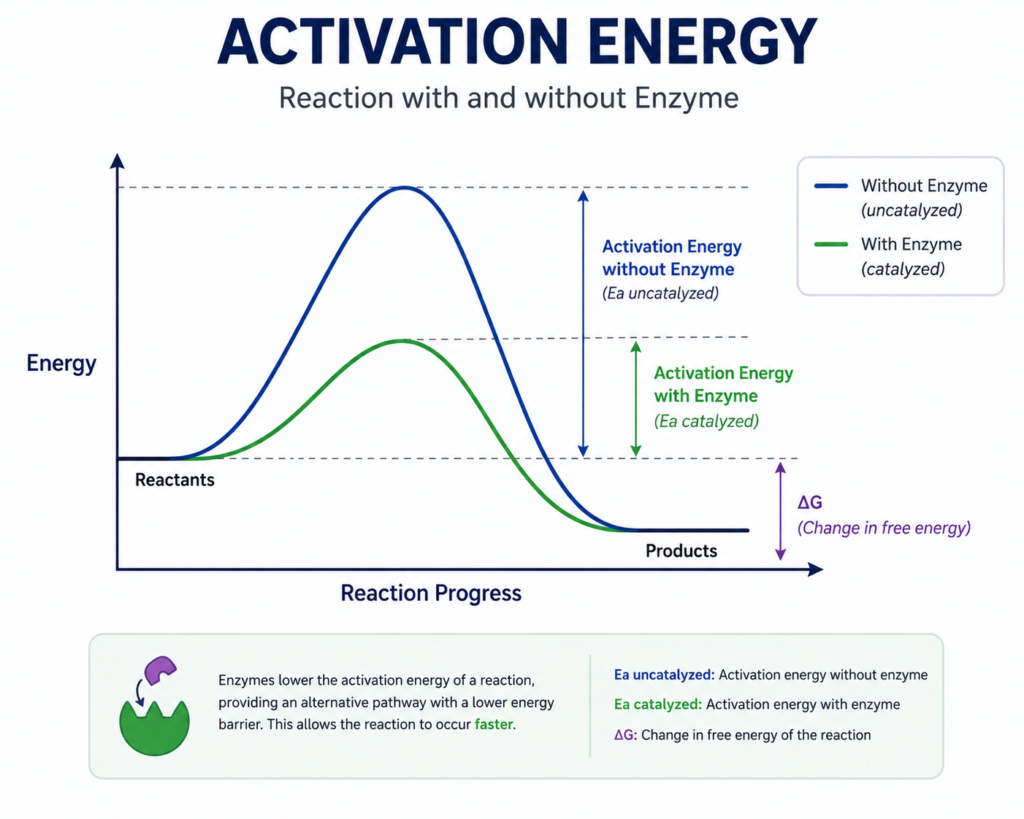
All chemical reactions require a minimum amount of energy to proceed — called activation energy. In biological systems, thermal energy alone is often insufficient to overcome this barrier at physiological temperatures without causing harmful heat damage to cells.
Enzymes solve this problem by providing an alternative reaction pathway with a lower activation energy. They do this by temporarily bonding to the substrate and placing it under physical stress, bringing reactive groups into close proximity, and/or creating a microenvironment with optimal chemical conditions. The result is a dramatically faster reaction at normal body temperature.
This is why temperature matters to enzyme function. Increasing temperature speeds up molecular motion and can increase reaction rates — up to a point. Above approximately 40-42°C (104-108°F), most human enzymes begin to lose their precise three-dimensional structure (denature) and their activity drops sharply. This is why high fever is dangerous: it can deactivate critical metabolic enzymes.
The slight increase in tissue temperature produced by therapeutic heat modalities or exercise-induced warming enhances local enzyme activity — one mechanism through which warm-up exercises improve neuromuscular performance.
pH and Enzyme Activity
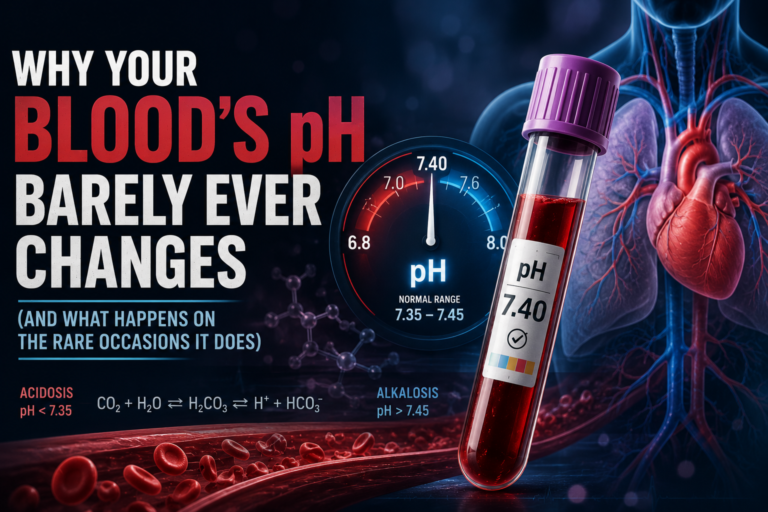
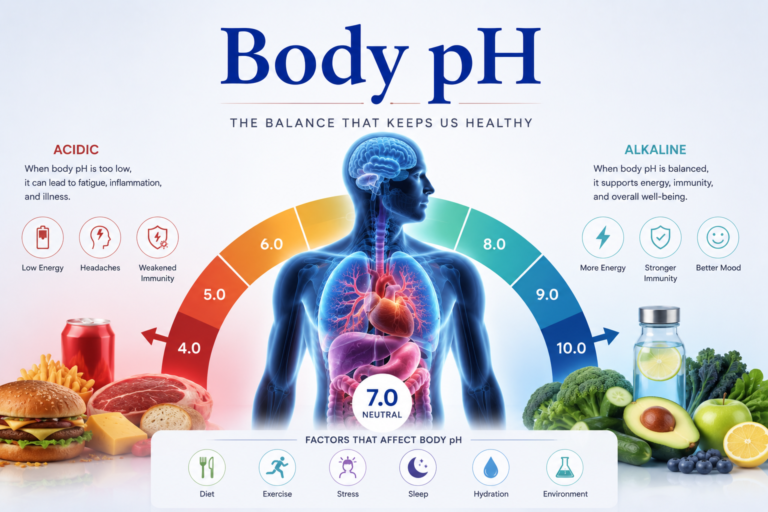
Enzymes are also sensitive to pH (the acidity or alkalinity of their environment). Each enzyme has an optimal pH at which it functions best. Most body enzymes work optimally at the near-neutral pH of intracellular fluid (pH ~7.2-7.4). However, some are adapted for very different environments: digestive enzymes in the stomach (pH ~2) are optimized for extreme acidity.
During intense exercise, the accumulation of hydrogen ions (H⁺) in muscle cells decreases intracellular pH — a condition called exercise-induced acidosis. This acidosis inhibits key metabolic enzymes (including phosphofructokinase, a rate-limiting enzyme in glycolysis) and impairs contractile proteins, contributing to muscle fatigue.
Recovery of normal intracellular pH — through buffering by bicarbonate and protein systems, and by removal of H⁺ by the bloodstream — is one of the processes that must occur before muscle function is fully restored. Physical therapy programs are designed to work within these physiological limits, using appropriate intensities that challenge without excessively acidifying the muscle environment.
Key Enzyme Groups in Musculoskeletal Physiology
Several enzyme families are particularly relevant in physical therapy and musculoskeletal health:
Creatine kinase (CK) catalyzes the regeneration of ATP from creatine phosphate — providing an immediate energy reserve during brief, intense muscle contractions. CK is found almost exclusively inside muscle cells. When muscle cells are damaged (by injury, eccentric exercise, or conditions like rhabdomyolysis), CK leaks into the bloodstream. Blood CK levels are therefore used clinically as a marker of muscle damage. Elevated CK in a blood test can confirm significant muscle injury and guides decisions about exercise intensity in rehabilitation.
Matrix metalloproteinases (MMPs) are a family of enzymes that degrade extracellular matrix proteins — including collagen, elastin, and fibronectin. They play essential roles in tissue remodeling during wound healing and normal connective tissue turnover. However, unregulated MMP activity — as seen in conditions like tendinopathy, osteoarthritis, and inflammatory joint disease — contributes to tissue destruction. Physical therapy interventions, including therapeutic exercise and modalities like ultrasound, can influence MMP activity and promote healthy tissue remodeling.
Phospholipase A2 (PLA2) catalyzes the release of arachidonic acid from cell membrane phospholipids. Arachidonic acid is the precursor to pro-inflammatory eicosanoids (prostaglandins and leukotrienes). Corticosteroid drugs reduce inflammation partly by inhibiting PLA2. Understanding this pathway explains why some physical therapy modalities that reduce membrane disruption (like compression and appropriate ice application) can help modulate the inflammatory cascade.
COX-1 and COX-2 (cyclooxygenases) convert arachidonic acid into prostaglandins — chemical mediators of pain, fever, and inflammation. NSAIDs (like ibuprofen and naproxen) work by inhibiting these enzymes. However, prostaglandins are also involved in normal tissue repair, which is why excessive NSAID use during healing may actually slow recovery in some contexts.
ATPases are enzymes that break down ATP into ADP and inorganic phosphate, releasing energy for biological work. Myosin ATPase in muscle cells powers the cross-bridge cycling of muscle contraction. Ca²⁺-ATPase in the sarcoplasmic reticulum pumps calcium back into storage after contraction — allowing muscle relaxation. Na⁺/K⁺-ATPase in the cell membrane maintains the ionic gradients essential for nerve and muscle function.
Enzymes and Drug Action: Relevance to Physical Therapy Patients
Many medications commonly used by physical therapy patients work by inhibiting specific enzymes:
- NSAIDs inhibit COX enzymes to reduce inflammation and pain.
- Statins (cholesterol-lowering drugs) inhibit HMG-CoA reductase, an enzyme in the cholesterol synthesis pathway. A known side effect of statins is muscle pain and weakness (statin-induced myopathy) — sometimes seen in physical therapy patients and potentially confused with injury.
- ACE inhibitors (blood pressure medications) inhibit angiotensin-converting enzyme (ACE). They affect blood pressure regulation and are used in patients with hypertension or heart failure, influencing their exercise tolerance in physical therapy.
Physical therapists benefit from understanding basic enzyme pharmacology to anticipate side effects, recognize medication-related changes in exercise capacity, and coordinate effectively with the medical team.
Cofactors and Coenzymes: Supporting Enzyme Function
Many enzymes require the help of non-protein molecules — called cofactors (minerals) or coenzymes (derived from vitamins) — to function. This is one of the biochemical explanations for why nutritional deficiencies can impair physical performance and recovery:
- Magnesium is required by over 300 enzymes, including those involved in ATP synthesis and DNA repair. Magnesium deficiency is associated with muscle cramps, fatigue, and impaired exercise performance.
- Zinc is required by many enzymes involved in immune function, protein synthesis, and wound healing.
- B vitamins (thiamine, riboflavin, niacin, etc.) are precursors to coenzymes (NAD, FAD, CoA) essential for energy metabolism.
Conclusion
Enzymes are the molecular engines of life. They orchestrate every reaction in the body — from generating the energy that powers muscle contraction to building the collagen that repairs torn tendons. Their activity is sensitive to temperature, pH, and nutritional factors, and their disruption by injury or disease produces measurable changes that inform clinical decision-making.
For physical therapy patients, enzyme biology helps explain why maintaining normal body temperature during rehabilitation matters, why certain medications affect exercise capacity, and why nutritional support for healing is not optional. Understanding these processes deepens appreciation for the remarkable precision with which the body manages its own repair — and the ways in which physical therapy supports and guides that process.
References
- Nelson, D.L., & Cox, M.M. (2021). Lehninger Principles of Biochemistry (8th ed.). W.H. Freeman.
- Berg, J.M., Tymoczko, J.L., Gatto, G.J., & Stryer, L. (2019). Biochemistry (9th ed.). W.H. Freeman.
Disclaimer: This article is for educational purposes only and does not constitute medical advice. Always consult a qualified healthcare professional for personal health concerns.
The site is written and curated by Paul Morgan, a graduate in Physiotherapy (2026), with a particular interest in cardiorespiratory and musculoskeletal physical therapy. Every article on this site is grounded in academic physiology and physical therapy coursework. Content reviewed for clinical accuracy before publishing.