Carbohydrates as Muscle Fuel: What Physical Therapy Patients Should Know
Discover how carbohydrates fuel muscles during exercise and physical therapy, why glycogen matters for recovery, and how carbohydrate intake influences rehabilitation outcomes.
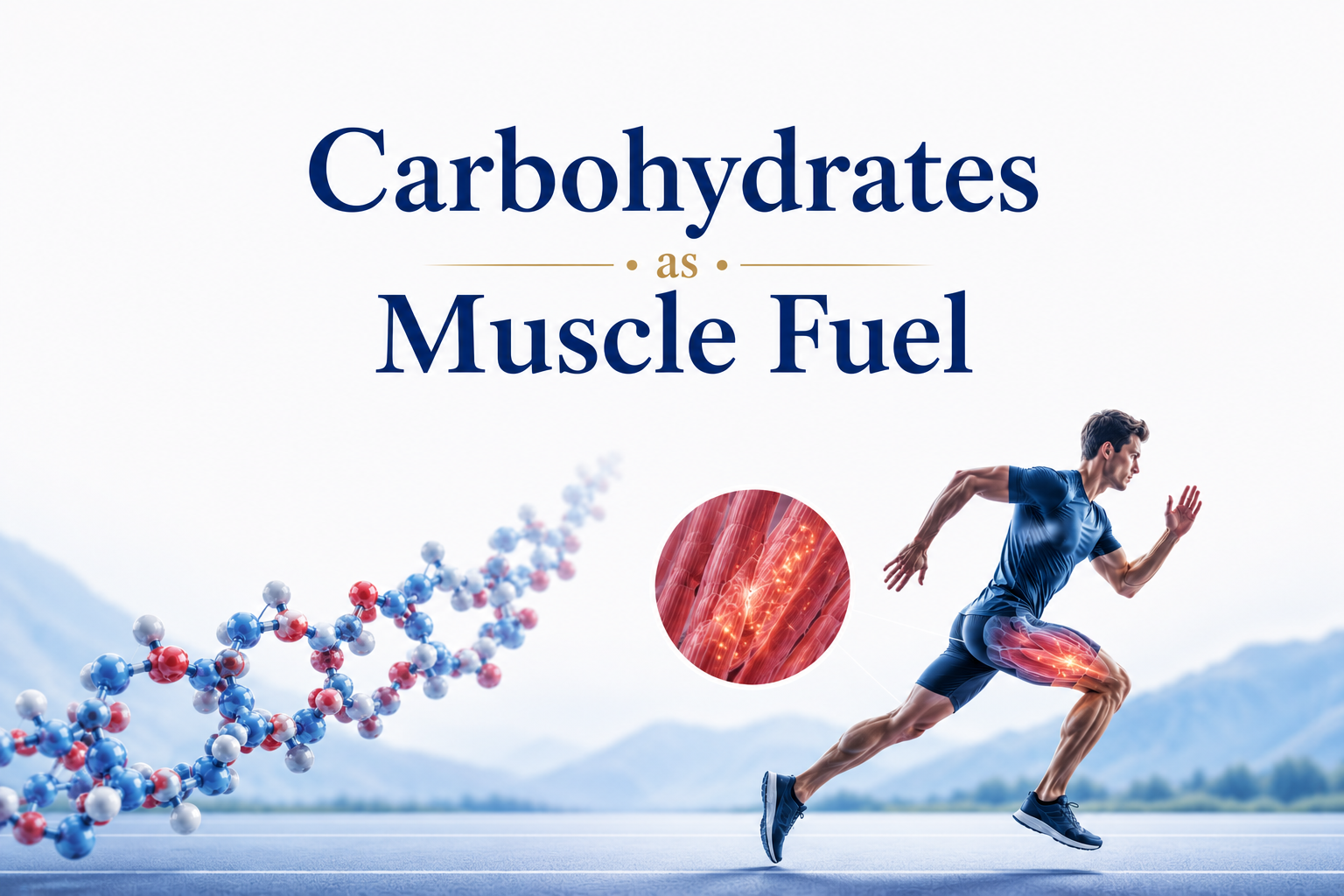
Carbohydrates have a complicated reputation. Popular diets often demonize them, while sports scientists recognize them as the preferred fuel for high-intensity exercise. In the context of physical therapy and rehabilitation, the truth about carbohydrates is nuanced: they are neither universally good nor bad, but strategically essential for anyone engaged in therapeutic exercise.
Understanding how carbohydrates work as fuel — from digestion and storage to combustion in muscle cells — helps physical therapy patients make informed nutritional choices that support their recovery.
What Are Carbohydrates?
Carbohydrates are organic molecules made of carbon, hydrogen, and oxygen, typically in the ratio of 1:2:1. They are classified by their size and complexity:
Monosaccharides are the simplest carbohydrates — single sugar units. The most important is glucose, which is the primary energy substrate for most cells. Fructose (found in fruit) and galactose (found in dairy) are also monosaccharides.
Disaccharides are two monosaccharides joined together. Common disaccharides include sucrose (table sugar = glucose + fructose), lactose (milk sugar = glucose + galactose), and maltose (= glucose + glucose).
Polysaccharides are long chains of monosaccharides. The most important for human physiology are:
- Starch: Found in plant foods (grains, legumes, potatoes). Digested into glucose in the small intestine.
- Glycogen: The storage form of glucose in the human body, found primarily in the liver and skeletal muscle.
- Cellulose (dietary fiber): Indigestible but important for gut health and blood sugar regulation.
During digestion, complex carbohydrates are broken down into glucose, which is absorbed into the bloodstream. This raises blood glucose levels, triggering insulin secretion from the pancreas. Insulin facilitates glucose uptake by muscle and liver cells for immediate use or storage as glycogen.
Glycogen: The Body’s Carbohydrate Reserve
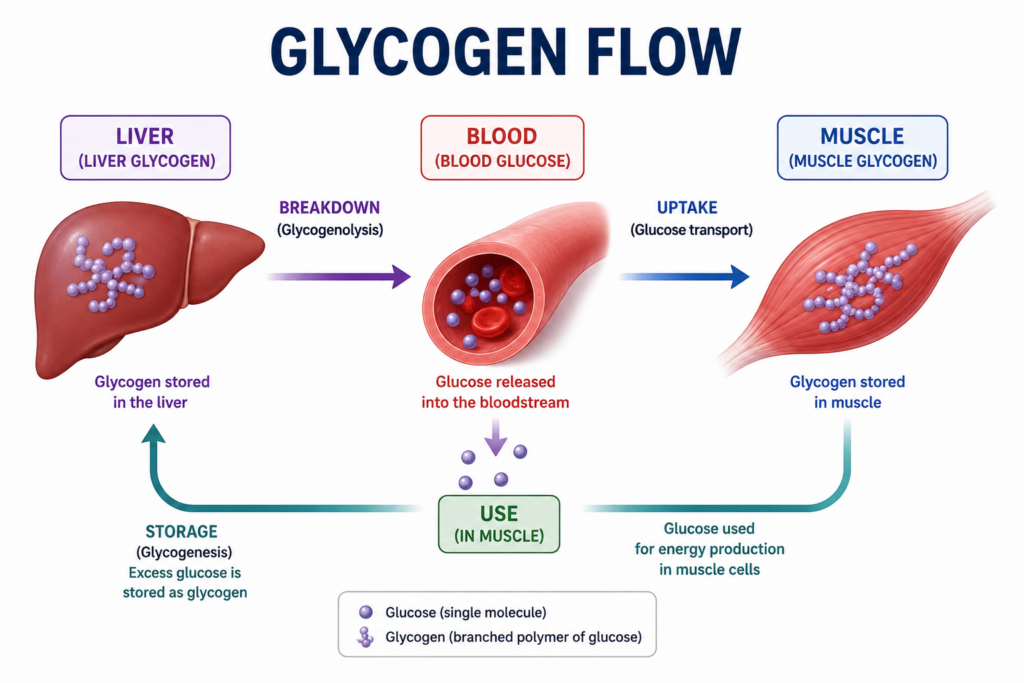
Glycogen is the body’s primary short-term energy storage molecule for carbohydrates. It is stored primarily in two locations:
Liver glycogen (approximately 100 grams): Serves as a reserve to maintain blood glucose levels between meals and during fasting. The liver releases glucose into the bloodstream when blood sugar falls.
Muscle glycogen (approximately 400-500 grams, more in trained athletes): This glycogen is for the exclusive use of the muscle in which it is stored — muscle cells lack the enzyme to release glucose into the bloodstream. During exercise, muscle cells break down their local glycogen to fuel contraction.
Glycogen depletion during exercise contributes significantly to fatigue, particularly during prolonged or high-intensity efforts. This is why athletes and active rehabilitation patients benefit from adequate carbohydrate intake before and after exercise sessions.
How Muscles Use Carbohydrates During Exercise
During exercise, muscles use glucose from two sources: blood glucose (supplied by the liver from dietary carbohydrates or glycogen breakdown) and local muscle glycogen. Which source predominates depends on exercise intensity and duration.
Low-intensity exercise relies more on fat oxidation, with moderate carbohydrate use. This is the metabolic zone relevant for long rehabilitation walks, light cycling, or aquatic therapy.
Moderate to high-intensity exercise — including most resistance training and functional therapeutic exercises — increasingly relies on carbohydrate metabolism through two pathways:
- Aerobic glycolysis (with oxygen): Glucose is broken down to pyruvate, which enters the mitochondria and is completely oxidized through the Krebs cycle and oxidative phosphorylation, producing approximately 30-32 ATP per glucose molecule.
- Anaerobic glycolysis (without sufficient oxygen): During very intense exercise, when oxygen delivery to muscles cannot keep up with demand, glucose is broken down to lactate, producing only 2 ATP per glucose but doing so extremely quickly. This supports the rapid energy demands of short, intense efforts.
Understanding this metabolic continuum helps explain why different types of therapeutic exercise feel different: endurance exercise at aerobic intensity feels sustainable but tiring over time due to glycogen depletion, while high-intensity resistance exercise causes the acute burning sensation associated with lactate accumulation.
Blood Glucose and Exercise Performance
Blood glucose levels during exercise influence both performance and recovery. Hypoglycemia (low blood sugar) during exercise causes fatigue, impaired concentration, and reduced exercise capacity — all of which undermine rehabilitation sessions.
Patients who exercise in a fasted state — without eating for several hours beforehand — are more susceptible to hypoglycemia during sessions, particularly if the session is prolonged or intense. Consuming a small carbohydrate-containing snack 1-2 hours before physical therapy can prevent this and support better session performance.
Patients with diabetes or insulin resistance require careful attention to blood glucose management around exercise. Physical therapists working with these populations coordinate exercise prescription with dietary guidance and, where applicable, with the patient’s endocrinology team.
Carbohydrates and Post-Exercise Recovery
After exercise, the muscles are in an accelerated state of glycogen synthesis — a window during which carbohydrate consumption is particularly effective at restoring glycogen stores. Research shows that consuming carbohydrates within 30-60 minutes after exercise maximizes glycogen resynthesis rates.
For patients in rehabilitation who train multiple times per week — or who have morning and afternoon sessions — this recovery window matters significantly. Inadequate carbohydrate intake between sessions can result in cumulative glycogen depletion, increasing fatigue and impairing rehabilitation performance over time.
A common post-exercise recovery strategy is combining carbohydrates with protein: carbohydrates replenish glycogen, while protein stimulates muscle protein synthesis. Practical options include a glass of chocolate milk, Greek yogurt with fruit, a chicken sandwich, or a protein shake with a banana.
Carbohydrate Quality and Physical Therapy
Not all carbohydrates have the same effect on the body. The glycemic index (GI) describes how quickly a carbohydrate food raises blood glucose levels:
High-GI foods (white bread, white rice, sugary drinks) cause a rapid spike in blood glucose followed by an insulin surge and rapid glucose removal from the bloodstream. These can be useful for very rapid pre- or post-exercise fueling.
Low-GI foods (oats, legumes, most vegetables, whole grains) release glucose more slowly, providing sustained energy over time and better blood sugar control.
For physical therapy patients managing body weight alongside their rehabilitation — a common concern — emphasizing low-GI carbohydrates, combined with adequate protein and healthy fats, provides sustained energy for sessions without excessive caloric intake.
Carbohydrate Needs During Rehabilitation
Carbohydrate requirements during rehabilitation depend on the type, frequency, and intensity of therapy sessions. As a rough guide:
- Light rehabilitation activity (walking, gentle range-of-motion): 3-5 grams per kilogram of body weight per day.
- Moderate rehabilitation (resistance exercise, functional training): 5-7 grams per kilogram per day.
- High-intensity rehabilitation (sports rehab, multiple sessions per day): 6-10 grams per kilogram per day.
Carbohydrate restriction in active rehabilitation patients — common among those following very low-carb or ketogenic diets — can impair high-intensity exercise performance, accelerate glycogen depletion, and increase protein breakdown as the body seeks alternative fuel sources. This is an important conversation for physical therapists to have with their patients.
Conclusion
Carbohydrates are not the enemy — they are the preferred fuel for working muscles. Understanding how glucose is stored as glycogen, how it is mobilized during exercise, and how it is replenished during recovery allows physical therapy patients to make informed nutritional decisions that support their rehabilitation.
By timing carbohydrate intake strategically — eating before sessions to ensure adequate fuel and after sessions to replenish glycogen — patients can get more out of every physical therapy appointment, recover more quickly between sessions, and ultimately achieve better outcomes. The science of carbohydrates is, at its heart, the science of fueling recovery.
References
- Nelson, D.L., & Cox, M.M. (2021). Lehninger Principles of Biochemistry (8th ed.). W.H. Freeman.
- Berg, J.M., Tymoczko, J.L., Gatto, G.J., & Stryer, L. (2019). Biochemistry (9th ed.). W.H. Freeman.
Disclaimer: This article is for educational purposes only and does not constitute medical advice. Always consult a qualified healthcare professional for personal health concerns.
The site is written and curated by Paul Morgan, a graduate in Physiotherapy (2026), with a particular interest in cardiorespiratory and musculoskeletal physical therapy. Every article on this site is grounded in academic physiology and physical therapy coursework. Content reviewed for clinical accuracy before publishing.