Body pH and Acid-Base Balance: What Happens When It Goes Wrong
Understand how the body maintains pH balance, what happens during exercise-induced acidosis, and how acid-base physiology relates to physical therapy and rehabilitation.
The human body is remarkably sensitive to changes in its internal chemical environment. Among the most tightly regulated variables is pH — the measure of acidity or alkalinity of body fluids. A shift of even a few tenths of a pH unit outside the normal range can impair enzyme function, disrupt nerve and muscle activity, and threaten life. Yet every physical movement, every breath, every metabolic reaction generates substances that challenge the body’s pH balance.
Understanding how the body maintains pH, what happens when it is disrupted during exercise, and how these processes relate to physical therapy provides valuable insight into muscle fatigue, recovery, and the physiological effects of therapeutic interventions.
Understanding pH
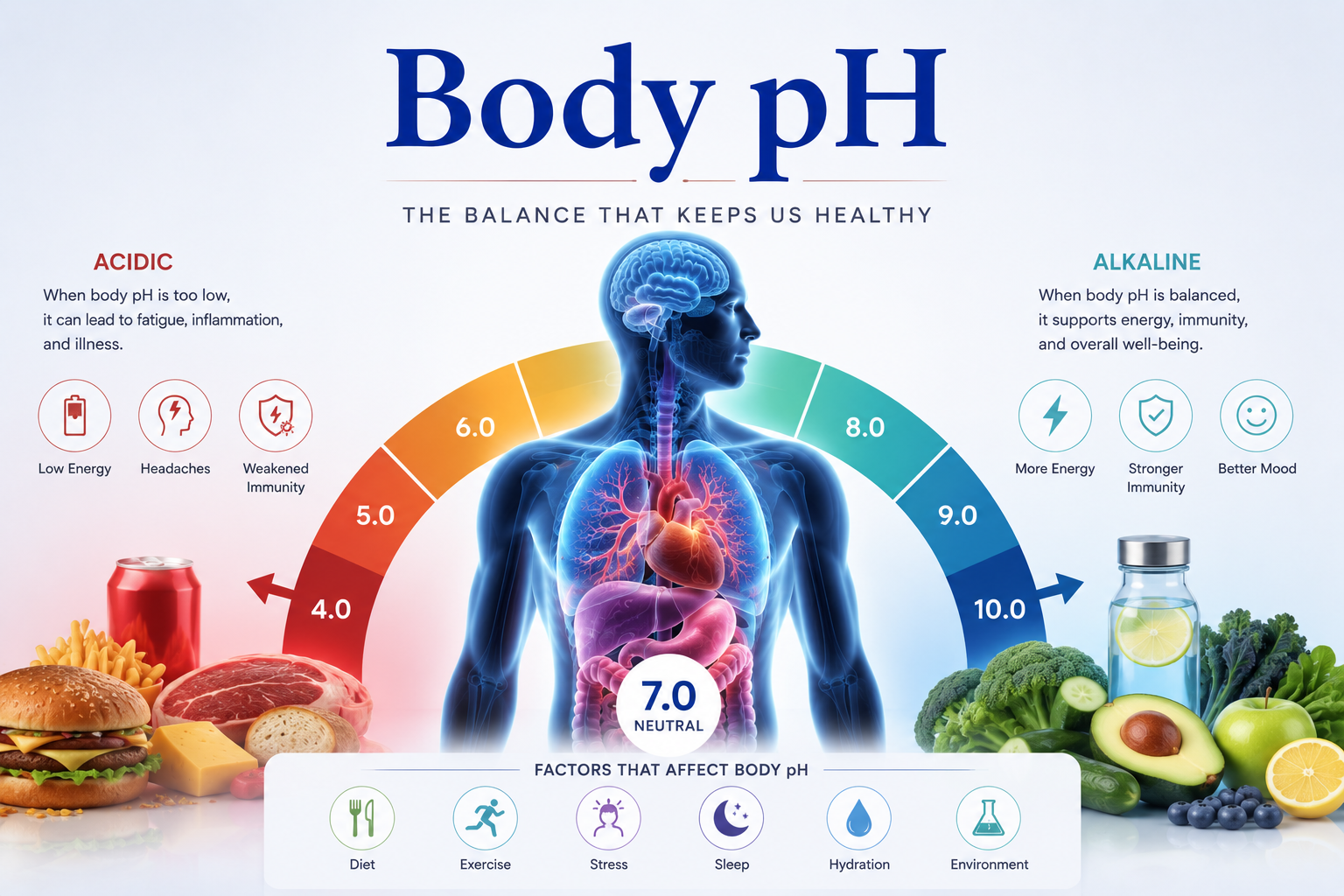
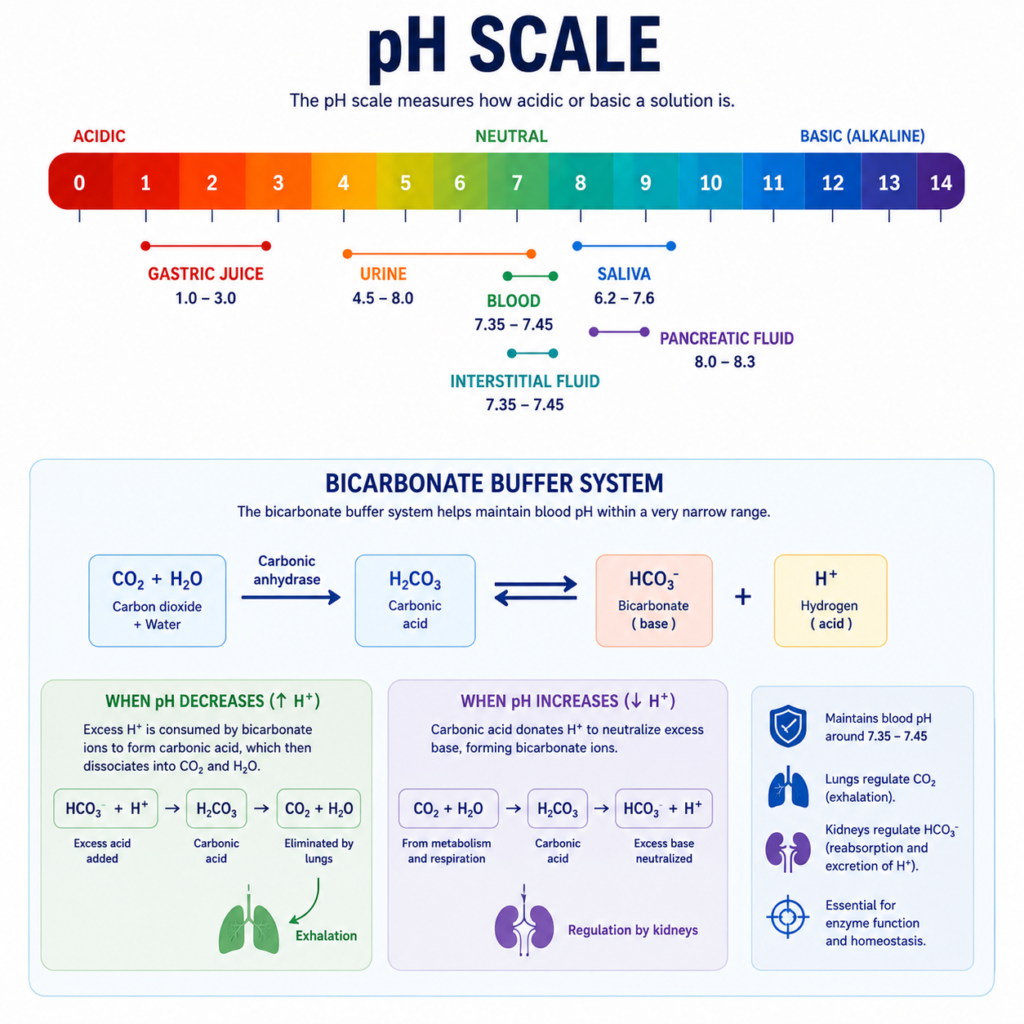
pH is a logarithmic scale that measures hydrogen ion (H⁺) concentration. It ranges from 0 (most acidic) to 14 (most alkaline), with 7 being neutral. In biological systems:
- A lower pH means higher H⁺ concentration (more acidic).
- A higher pH means lower H⁺ concentration (more alkaline).
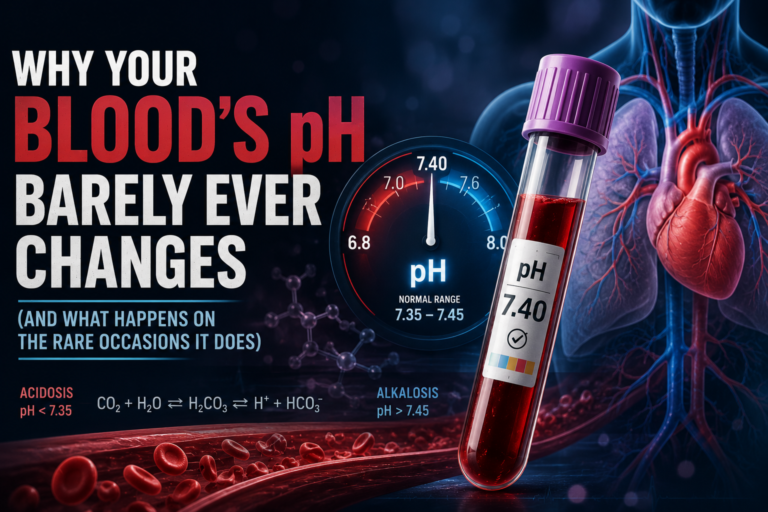
The blood has a tightly regulated pH of approximately 7.35 to 7.45 — slightly alkaline. This narrow range is essential for normal biological function: enzymes, proteins, and cellular processes are optimized for this pH.
Different body compartments have different pH values. The stomach has a strongly acidic pH of 1.5-3.5 — optimal for the digestive enzyme pepsin and for killing ingested bacteria. Intracellular pH is slightly more acidic than blood, around 7.0-7.2. Urine pH varies considerably (4.5-8.0) depending on what the kidneys are excreting.
The Body’s pH Buffer Systems
Because metabolic processes constantly produce acids, the body relies on three complementary systems to prevent dangerous pH fluctuations:
1. Chemical buffer systems — the fastest response (acting within seconds). The most important is the bicarbonate buffer system:
CO₂ + H₂O ⇌ H₂CO₃ ⇌ H⁺ + HCO₃⁻
When acid (H⁺) is added to the blood, bicarbonate ions (HCO₃⁻) absorb the H⁺, forming carbonic acid (H₂CO₃), which quickly breaks down into CO₂ and water. The CO₂ is then exhaled. This system is extremely effective because both CO₂ (controlled by breathing) and HCO₃⁻ (regulated by the kidneys) can be adjusted rapidly.
Protein buffers (including hemoglobin) and phosphate buffers also contribute within cells and in other body fluids.
2. The respiratory system — responds within minutes. By increasing or decreasing the rate and depth of breathing, the lungs adjust how much CO₂ is exhaled, directly influencing blood pH. Hyperventilation (fast, deep breathing) blows off CO₂, raising pH. Hypoventilation retains CO₂, lowering pH. This is why breathing control is taught in various physical therapy contexts — including respiratory therapy and relaxation techniques for pain management.
3. The renal system — responds over hours to days, but provides the most precise long-term control. The kidneys regulate pH by excreting or retaining H⁺ and HCO₃⁻. In acidic conditions, the kidneys increase H⁺ excretion and retain bicarbonate. In alkaline conditions, the kidneys do the opposite.
Exercise and Acid-Base Balance
Physical exercise is one of the greatest natural challenges to the body’s pH balance. During intense exercise, several metabolic processes generate significant amounts of acid:
Anaerobic glycolysis produces lactate and H⁺ as byproducts of rapidly generating ATP from glucose without sufficient oxygen. The H⁺ ions — not lactate itself, contrary to popular belief — are the primary cause of the burning sensation in muscles during intense exercise and contribute to muscle fatigue by inhibiting key metabolic enzymes.
The intensity and duration of exercise determine how much H⁺ is generated. Light aerobic exercise (such as walking or gentle cycling during rehabilitation) produces minimal acid accumulation. High-intensity therapeutic exercise or functional training can temporarily lower intracellular pH significantly.
The body counters this through:
- Bicarbonate buffering in the blood
- Increased breathing rate (blowing off CO₂)
- Uptake of lactate and H⁺ by less active muscles, heart, and liver (where lactate is converted back to glucose — the Cori cycle)
- Transport of H⁺ out of muscle cells by specific carrier proteins
Recovery from exercise-induced acidosis typically takes 30-60 minutes depending on the intensity of the session.
Practical Implications for Physical Therapy
Understanding acid-base physiology has direct relevance for physical therapy practice:
Exercise intensity prescription: The threshold at which anaerobic metabolism (and significant acid production) begins is called the lactate threshold or anaerobic threshold. For most sedentary patients, this occurs at relatively low exercise intensities. Physical therapists prescribe exercise intensities that match the patient’s current threshold, progressively increasing intensity as fitness and buffer capacity improve.
Rest intervals during rehabilitation: Adequate rest between high-intensity exercise sets allows acid to be cleared from muscles and pH to normalize, maintaining exercise quality and reducing injury risk. Physical therapists carefully balance work and rest intervals.
Breathing and pH: Dysfunctional breathing patterns — including breath-holding during exercise (Valsalva maneuver) or excessive shallow breathing — can transiently alter blood pH. Respiratory physical therapy teaches patients optimal breathing mechanics that support stable pH during exercise.
pH and pain perception: Acidic conditions in tissues directly activate acid-sensing ion channels (ASICs) on nociceptors — pain-sensing nerve endings. This is one mechanism through which tissue acidosis during inflammation and intense exercise contributes to pain. Physical therapy interventions that reduce local acidosis — including improving blood flow, managing inflammation, and progressive exercise — indirectly help manage pain through this pH mechanism.
Acid-Base Disorders: When the System Fails
When the body’s pH regulatory systems are overwhelmed, acid-base disorders develop:
Respiratory acidosis occurs when the lungs cannot remove enough CO₂ — as in chronic obstructive pulmonary disease (COPD), asthma, or respiratory muscle weakness. Blood pH falls below 7.35. Respiratory physical therapy — including breathing exercises, airway clearance techniques, and respiratory muscle training — directly addresses the respiratory component of this disorder.
Respiratory alkalosis results from hyperventilation — excessive CO₂ removal. Anxiety-induced hyperventilation during physical therapy (particularly in patients with chronic pain or fear of movement) can cause respiratory alkalosis, presenting with dizziness, tingling, and muscle cramps. Teaching diaphragmatic breathing and addressing fear of movement are part of physical therapy management.
Metabolic acidosis develops when the kidneys cannot excrete enough acid or when excessive acid is produced (as in diabetic ketoacidosis). It can also occur with severe, prolonged high-intensity exercise in untrained individuals.
Metabolic alkalosis results from excessive loss of acid (vomiting) or excessive retention of bicarbonate.
Bicarbonate Supplementation and Exercise
Athletes sometimes use sodium bicarbonate (baking soda) as a performance-enhancing supplement, as it increases blood buffering capacity and delays the onset of fatigue during high-intensity exercise. While not a standard physical therapy tool, understanding this principle illustrates how acid-base manipulation can influence exercise performance — and reinforces the physiological rationale behind managing exercise intensity during rehabilitation.
Conclusion
Body pH is not a static number — it is a dynamic, constantly challenged variable that the body manages with impressive precision through chemical buffers, breathing adjustments, and kidney function. Exercise, injury, and illness all challenge this system in ways that directly affect muscle function, pain perception, and recovery.
Physical therapy engages with acid-base physiology every day — in the exercise intensities prescribed, the breathing mechanics taught, and the pacing of rehabilitation sessions. Understanding these physiological principles transforms rehabilitation from art into science, allowing more precise, effective, and individualized care.
References
- Nelson, D.L., & Cox, M.M. (2021). Lehninger Principles of Biochemistry (8th ed.). W.H. Freeman.
- Berg, J.M., Tymoczko, J.L., Gatto, G.J., & Stryer, L. (2019). Biochemistry (9th ed.). W.H. Freeman.
Disclaimer: This article is for educational purposes only and does not constitute medical advice. Always consult a qualified healthcare professional for personal health concerns.
The site is written and curated by Paul Morgan, a graduate in Physiotherapy (2026), with a particular interest in cardiorespiratory and musculoskeletal physical therapy. Every article on this site is grounded in academic physiology and physical therapy coursework. Content reviewed for clinical accuracy before publishing.