Why You Wake Up With a Stiff Neck (and How Your Pillow Height Can Fix It)
Morning neck pain almost always has a measurable cause: your pillow height. We break down the mechanism, the evidence, and how to adjust it.
You wake up, turn your head, and there it is: that stiffness that takes half the morning to fade. It’s one of the most common complaints in physical therapy clinics, and the first suspect is usually the mattress. But in many cases, the real problem sits just fifteen centimeters away: the pillow.
The Problem
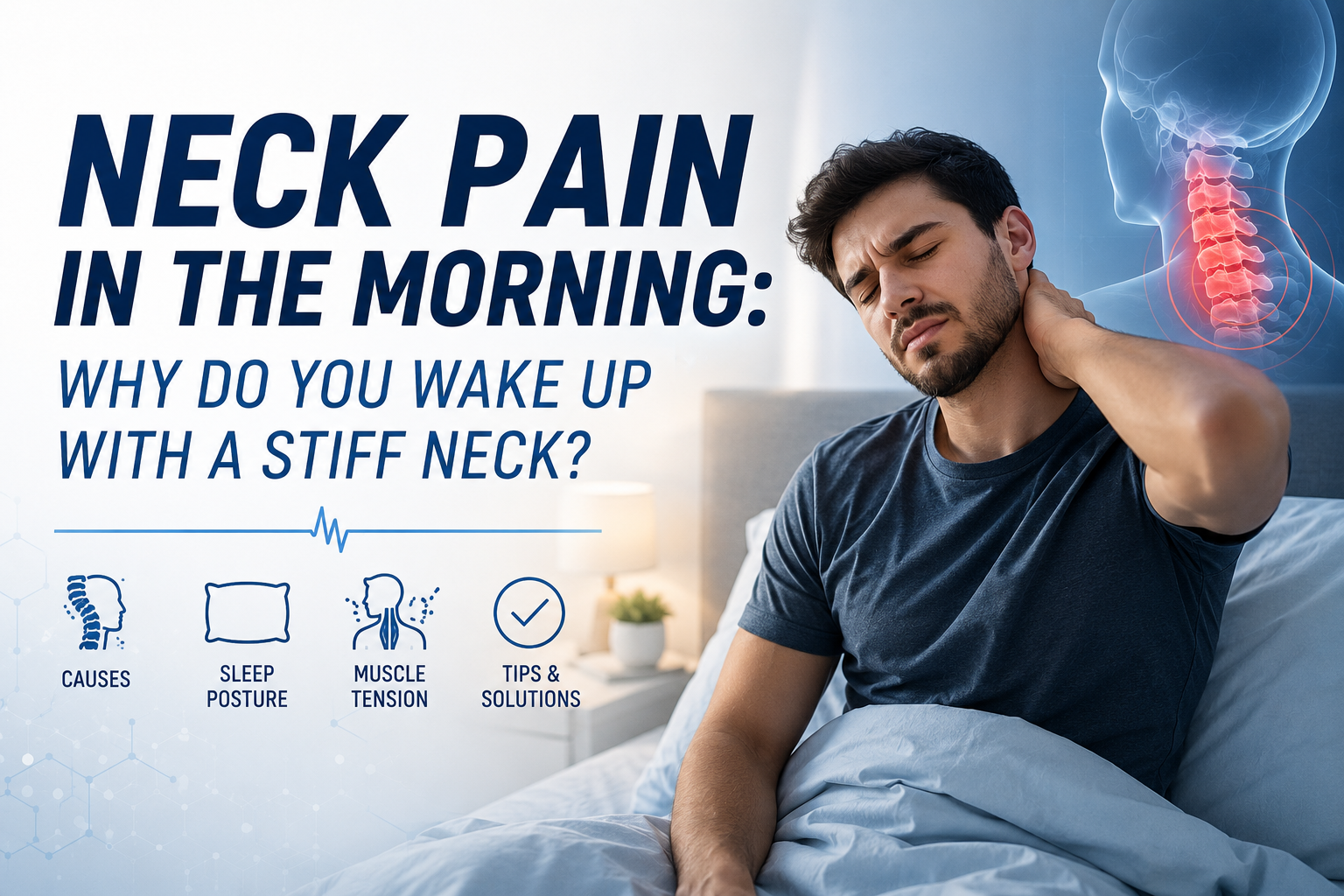
Morning neck pain shows up when the cervical spine spends six to eight hours outside its neutral position. No injury or bad movement is required — it’s enough for the head to sit too high, too low, or rotated, night after night, for the muscles and ligaments of the neck to overwork while they should be resting. It’s a quiet problem because it doesn’t hurt while it’s happening — only once you wake up.
Why It Happens: The Evidence
A 2024 study published in Sleep and Breathing used electromyography to measure activity in the sternocleidomastoid and trapezius muscles at different pillow heights during side sleeping. The finding was clear: a pillow height equal to the width of a person’s own shoulder produced the lowest muscle activity of the three heights tested. Any other height — too low or too high — forced those muscles to stay active all night just to hold the head’s weight in a position that wasn’t neutral.
The Solution
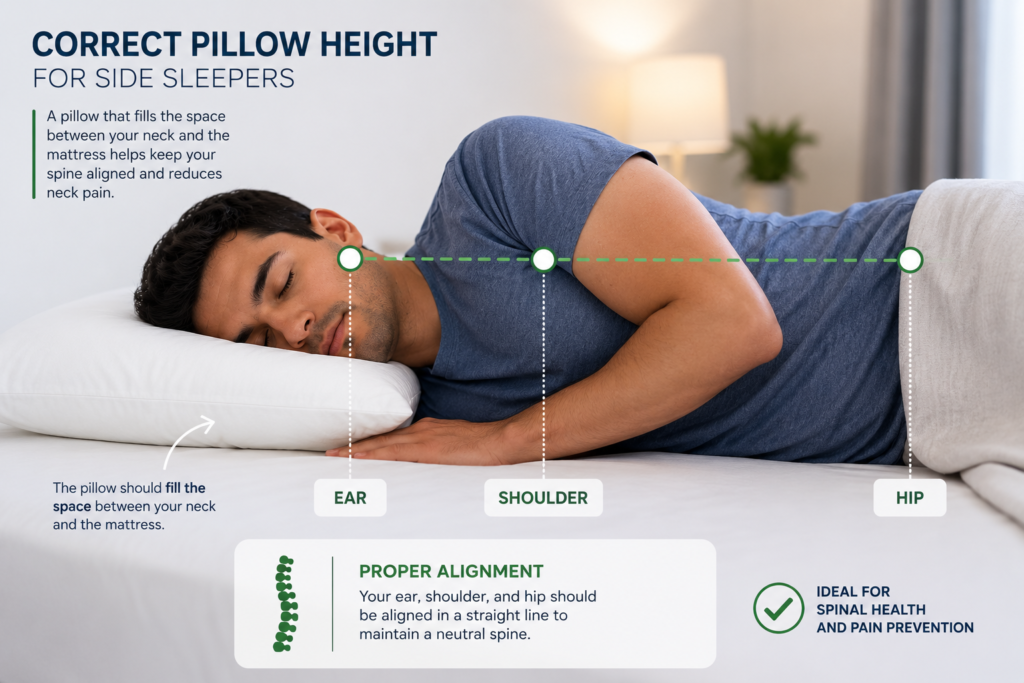
A 2023 study published in the Journal of Physical Therapy Science went a step further: instead of just measuring, they intervened. Researchers measured each participant’s ideal pillow height using the “Set-up for Spinal Sleep” method (which essentially calculates the gap between the neck and the mattress while lying on one’s side, so the cervical spine stays perfectly aligned with the rest of the back), and replaced participants’ usual pillows with one matched to that exact measurement. The result: a clinically significant improvement in both neck pain and the somatic symptoms linked to stress and poor sleep quality.
In practice, this translates into a simple self-check: lying on your side, the gap between your ear and the mattress should be filled by the pillow without the neck tilting up or down. If you sleep on your back, the pillow should be lower, just enough to keep your nose aligned with your breastbone. And if you sleep on your stomach — the worst position for the neck, because of the sustained rotation it demands — the most effective fix is usually to flatten it as much as possible or remove it.
Exercises
Besides adjusting your pillow, strengthening the deep neck muscles helps them tolerate an imperfect sleeping position better.
- Craniocervical flexion (the minimal “head nod”). Lying on your back with no pillow, make a subtle nodding motion as if saying “yes,” without lifting the back of your head off the floor or tensing your whole neck. Hold 5 seconds, repeat 10 times. This move specifically activates the deep neck flexors, the same muscles weakened by sustained poor posture.
- Chin tuck (cervical retraction). Sitting with a straight back, pull your chin backward as if making a double chin, keeping your eyes forward. Hold 3 seconds, repeat 10 times, 2-3 times a day.
Supporting video: How to Strengthen your DEEP Neck (Cervical) Flexors ↗
A full deep neck flexor routine — watch it in full before linking it, to confirm the progression matches what you’re recommending to readers.
References
- Jiao R, Xiao W, Wang M, Yu S, Li H. The impact of pillow height on neck muscle activity: a pilot study. Sleep Breath. 2024. PMID: 39625641.
- Yamada S, Hoshi T, Toda M, Tsuge T, Matsudaira K, Oka H. Changes in neck pain and somatic symptoms before and after the adjustment of the pillow height. J Phys Ther Sci. 2023;35(2):106-113. PMID: 36744195.
Disclaimer: This article is general information and does not replace an individual assessment. If neck pain is severe, doesn’t improve within a few weeks, or comes with arm tingling, severe headache, or dizziness, see a physical therapist or doctor.