The Krebs Cycle Made Simple: Aerobic Energy and Its Importance in Physical Therapy
Learn how the Krebs cycle generates aerobic energy in the mitochondria, why it matters for endurance and recovery, and how physical therapy leverages this metabolic pathway.
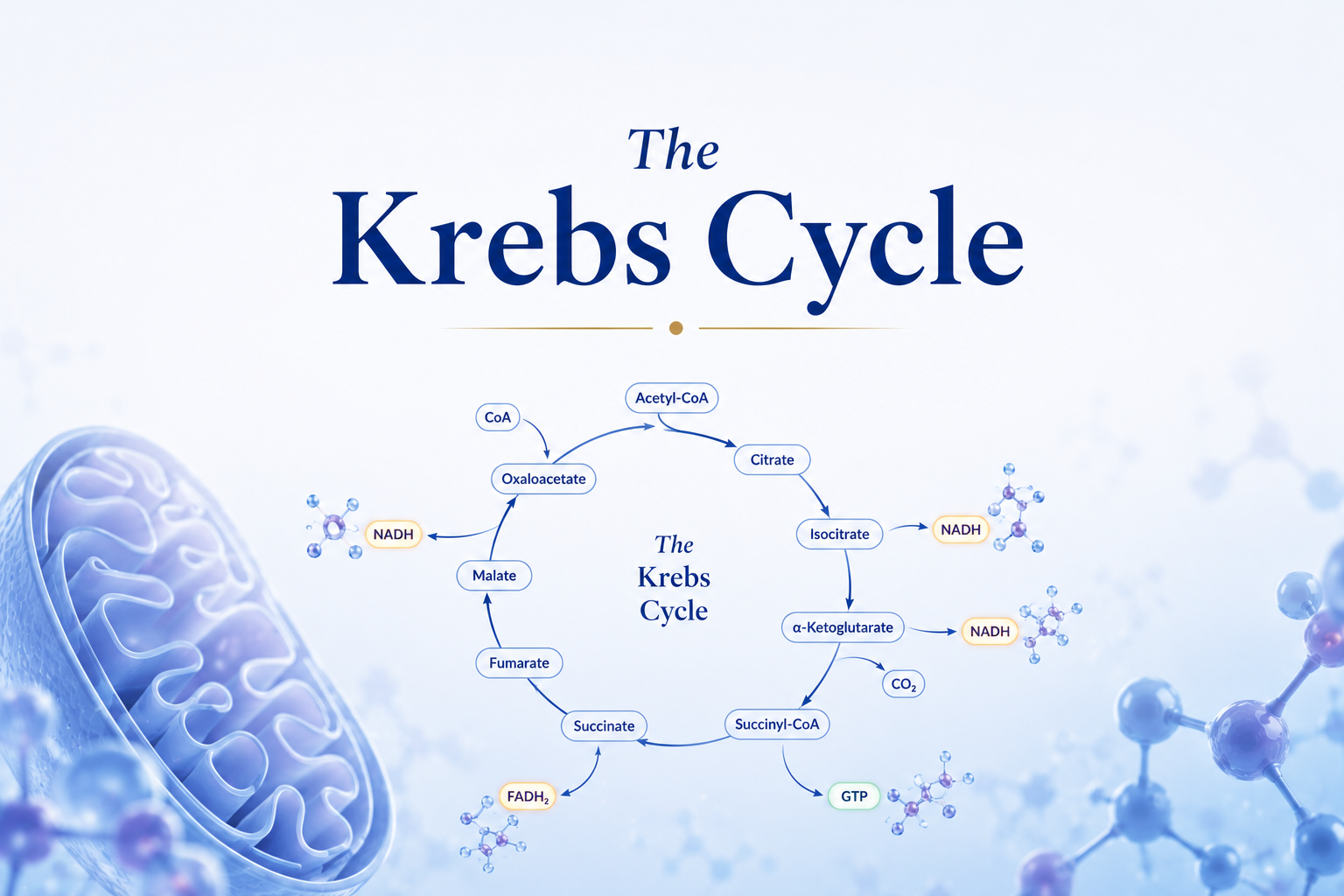
If you have ever wondered what actually happens inside mitochondria when you exercise, the answer lies largely in a series of eight chemical reactions called the Krebs cycle (also known as the citric acid cycle or TCA cycle). First described by biochemist Hans Krebs in 1937 — work that earned him the Nobel Prize — this metabolic pathway is the central hub of aerobic energy production, connecting carbohydrate, fat, and protein metabolism and powering the electron transport chain that generates the vast majority of ATP used during sustained exercise.
For physical therapy patients engaged in aerobic conditioning, functional rehabilitation, or cardiovascular recovery programs, understanding the Krebs cycle provides insight into why aerobic fitness matters, why nutrition supports recovery, and why the body responds to exercise the way it does.
Setting the Scene: Where the Krebs Cycle Fits
Before diving into the cycle itself, it helps to understand where it fits in the broader landscape of cellular energy production.
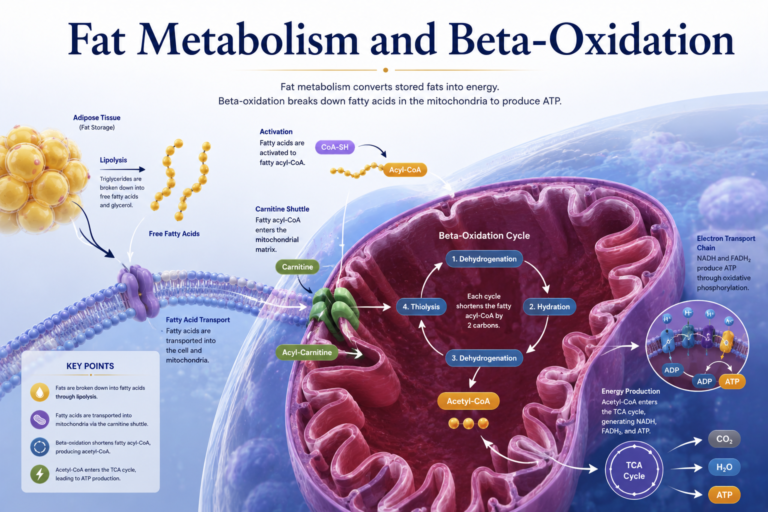
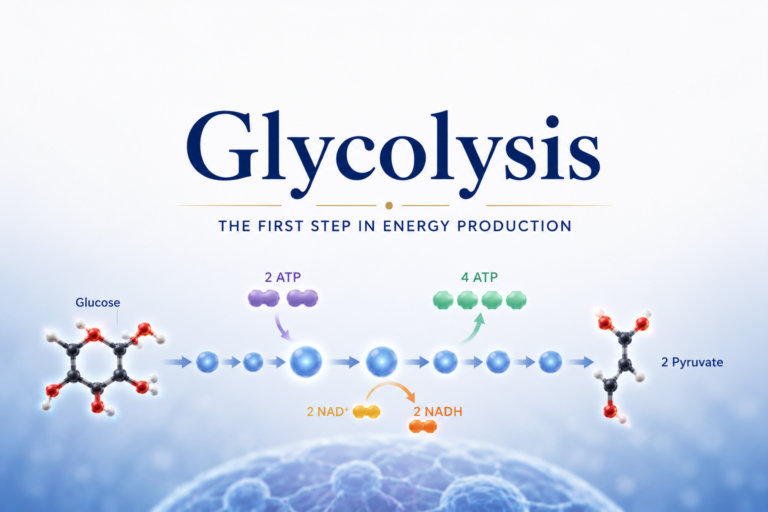
Glucose is first broken down by glycolysis (in the cytoplasm) into pyruvate. Fatty acids are processed in the mitochondria through beta-oxidation. Amino acids from protein breakdown are also converted into intermediates. All of these pathways eventually produce acetyl-CoA — a 2-carbon molecule attached to coenzyme A — which is the primary fuel that enters the Krebs cycle.
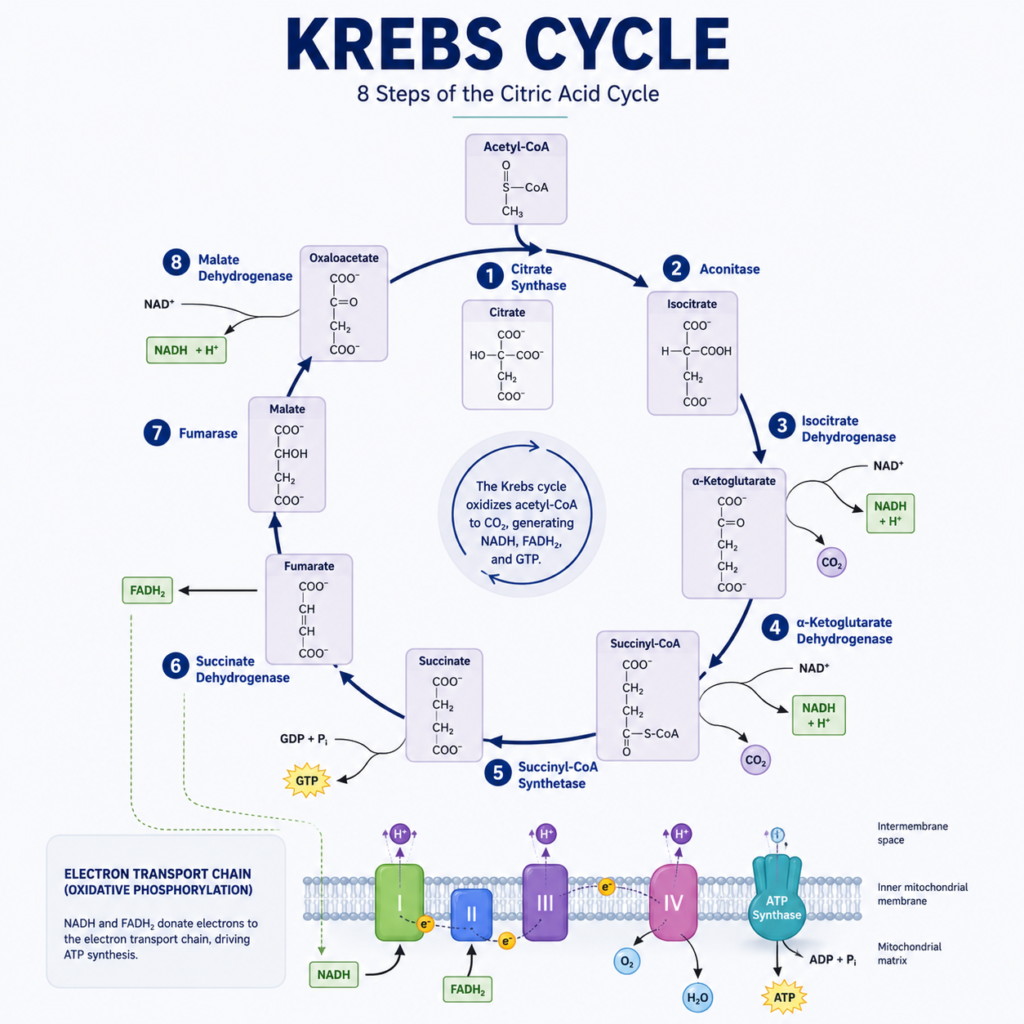
The Krebs cycle occurs in the mitochondrial matrix — the space enclosed by the inner mitochondrial membrane. For each turn of the cycle, one acetyl-CoA molecule is fully oxidized (its carbons are released as CO₂), and the energy extracted is used to produce electron carriers (NADH and FADH₂) that feed into the electron transport chain.
Since one glucose molecule produces 2 pyruvate molecules → 2 acetyl-CoA molecules, the Krebs cycle turns twice per glucose molecule.
The Eight Steps of the Krebs Cycle
Though the detailed chemistry of each step is complex, the cycle can be understood conceptually:
- Acetyl-CoA (2 carbons) combines with oxaloacetate (4 carbons) to form citrate (6 carbons). This is why the cycle is also called the citric acid cycle.
2–3. Citrate is rearranged to form isocitrate.
- Isocitrate is oxidized, releasing CO₂ and producing NADH. The 6-carbon molecule becomes a 5-carbon molecule (alpha-ketoglutarate).
- Alpha-ketoglutarate is oxidized, releasing another CO₂ and producing NADH. The molecule becomes the 4-carbon molecule succinyl-CoA.
- Succinyl-CoA is converted to succinate, generating GTP (equivalent to ATP) in the process.
- Succinate is oxidized to fumarate, producing FADH₂.
- Fumarate is converted back to oxaloacetate (via malate), producing NADH.
The cycle is now complete, and oxaloacetate is ready to combine with another acetyl-CoA molecule.
Products per turn of the cycle: 3 NADH, 1 FADH₂, 1 GTP, 2 CO₂.
Products per glucose (two turns): 6 NADH, 2 FADH₂, 2 GTP.
These electron carriers (NADH and FADH₂) do not directly produce much ATP — their energy is harnessed in the next stage: the electron transport chain.
The Electron Transport Chain: Where Most ATP Is Made
The NADH and FADH₂ produced by the Krebs cycle carry high-energy electrons to the electron transport chain (ETC) — a series of protein complexes embedded in the inner mitochondrial membrane. As electrons pass along the chain, the energy released is used to pump protons (H⁺) across the inner membrane, creating an electrochemical gradient.
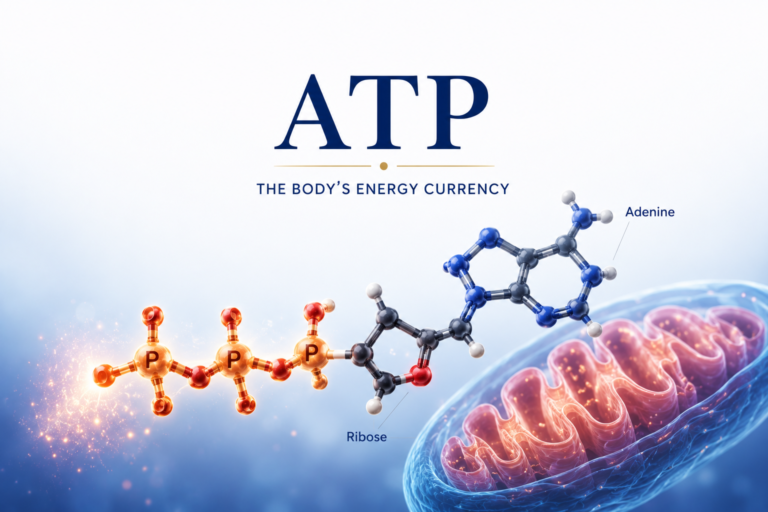
This gradient drives the enzyme ATP synthase to synthesize ATP from ADP and inorganic phosphate — a process called oxidative phosphorylation. Oxygen is the final electron acceptor, combining with electrons and protons to form water.
This is the fundamental reason why oxygen is essential for aerobic exercise: without oxygen to accept the final electrons, the ETC stops, NADH and FADH₂ cannot be regenerated to NAD⁺ and FAD, the Krebs cycle stalls, and aerobic ATP production ceases.
The complete aerobic oxidation of one glucose molecule (glycolysis + Krebs cycle + ETC) yields approximately 30-32 ATP molecules — compared to only 2 from anaerobic glycolysis alone. This massive efficiency advantage is why aerobic metabolism can sustain exercise for hours, while anaerobic glycolysis exhausts itself in minutes.
The Krebs Cycle as a Metabolic Hub
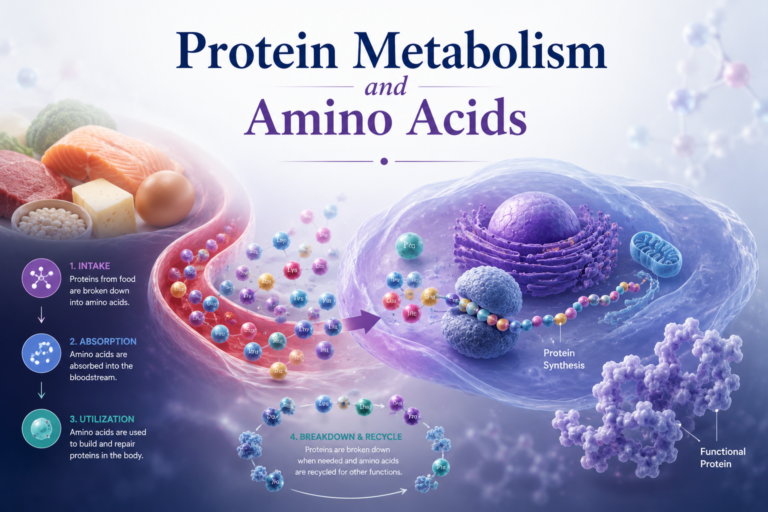
One of the most important — and often overlooked — aspects of the Krebs cycle is that it is not just an energy-generating pathway. It is also a biosynthetic hub: its intermediates are used to produce amino acids, glucose, heme groups (needed for hemoglobin), fatty acids, and other essential molecules.
For example:
- Alpha-ketoglutarate can be converted into glutamate (an amino acid).
- Oxaloacetate can be converted into aspartate (an amino acid) or into glucose (via gluconeogenesis) during fasting.
- Succinyl-CoA is a precursor to heme (the oxygen-binding component of hemoglobin).
This biosynthetic role explains why the Krebs cycle is continuously active even in non-exercising cells — it supplies the carbon skeletons needed for building and repairing tissues. In physical therapy rehabilitation, where tissue building is a primary goal, the Krebs cycle’s biosynthetic function is as important as its energy-generating one.
Aerobic Capacity and Physical Therapy
The capacity of the aerobic system — which depends on the Krebs cycle and oxidative phosphorylation — determines how much work the body can sustain over time. This capacity is measured as VO₂max (maximum oxygen uptake) and is one of the strongest predictors of cardiovascular health, exercise tolerance, and longevity.
After injury, surgery, or prolonged illness, aerobic capacity declines significantly due to:
- Reduced physical activity and mitochondrial loss in muscles.
- Cardiovascular deconditioning (reduced cardiac output and efficiency).
- Loss of oxidative enzyme activity, including Krebs cycle enzymes.
Physical therapy aerobic conditioning programs specifically target these adaptations. Steady-state aerobic exercise at moderate intensity (below the lactate threshold) maximally stresses the aerobic system and drives:
- Mitochondrial biogenesis (more mitochondria, more Krebs cycle capacity).
- Increased activity of Krebs cycle enzymes (including citrate synthase — a marker of aerobic training).
- Improved oxygen delivery (cardiac output, capillary density, hemoglobin levels).
These adaptations make the aerobic system more efficient, reducing the relative metabolic cost of any given level of activity — meaning patients can perform more activity with less fatigue as rehabilitation progresses.
Nutrition and the Krebs Cycle
The Krebs cycle requires more than just acetyl-CoA to function. Several B vitamins act as coenzymes for enzymes within the cycle:
- Thiamine (B1): Coenzyme for pyruvate dehydrogenase (which produces acetyl-CoA) and alpha-ketoglutarate dehydrogenase.
- Riboflavin (B2): Component of FAD, which is reduced to FADH₂ in step 7.
- Niacin (B3): Component of NAD, which is reduced to NADH in multiple steps.
- Pantothenic acid (B5): Component of coenzyme A (CoA), which carries acetyl groups into the cycle.
Deficiencies in these vitamins impair Krebs cycle function and can contribute to fatigue, reduced exercise capacity, and slower healing. For physical therapy patients with poor dietary habits, nutritional deficiencies can be a hidden barrier to rehabilitation progress.
Conclusion
The Krebs cycle is the metabolic engine at the heart of aerobic energy production — a beautifully orchestrated sequence of reactions that extracts energy from nutrients and prepares it for conversion into ATP. Its efficiency makes sustained physical activity possible; its biosynthetic functions make tissue repair possible; and its adaptability makes physical therapy effective.
Every time a physical therapy patient completes an aerobic conditioning session, they are exercising not just their heart and lungs but their mitochondria — stimulating the very enzymes of the Krebs cycle to become more numerous and more efficient. This is the molecular foundation of endurance rehabilitation and the biochemical reason why regular exercise is genuinely transformative for human health.
References
- Nelson, D.L., & Cox, M.M. (2021). Lehninger Principles of Biochemistry (8th ed.). W.H. Freeman.
- Berg, J.M., Tymoczko, J.L., Gatto, G.J., & Stryer, L. (2019). Biochemistry (9th ed.). W.H. Freeman.
Disclaimer: This article is for educational purposes only and does not constitute medical advice. Always consult a qualified healthcare professional for personal health concerns.
The site is written and curated by Paul Morgan, a graduate in Physiotherapy (2026), with a particular interest in cardiorespiratory and musculoskeletal physical therapy. Every article on this site is grounded in academic physiology and physical therapy coursework. Content reviewed for clinical accuracy before publishing.