Testosterone and Muscle Development: What Physical Therapists and Patients Need to Know
Explore how testosterone drives muscle growth and recovery, how it affects rehabilitation outcomes for men and women, and the role of physical therapy in optimizing muscular health.
When people talk about building muscle, testosterone is usually the first hormone that comes to mind. And for good reason: testosterone is the primary anabolic hormone in the human body, responsible not only for male secondary sexual characteristics but also for the muscle growth, bone density, and connective tissue resilience that are critical for physical performance and rehabilitation from injury.
But testosterone is not exclusively a male hormone — women produce it too, albeit in smaller amounts — and its effects on musculoskeletal health are relevant to physical therapy patients of all genders and ages. This article explores how testosterone works, its effects on muscle development, bone, and connective tissue, what happens when levels are suboptimal, and how physical therapy both benefits from and influences testosterone physiology.
What Is Testosterone?
Testosterone is a steroid hormone — derived from cholesterol — produced primarily by the Leydig cells in the testes in men and, in smaller quantities, by the ovaries and adrenal glands in women. It belongs to the class of hormones called androgens.
Normal testosterone levels:
- Men: 300-1,000 ng/dL (averaging approximately 600-700 ng/dL in healthy young adult men)
- Women: 15-70 ng/dL (approximately 10-20 times lower than men)
Despite the large difference in circulating levels, testosterone plays important roles in both sexes, including effects on muscle mass, bone density, libido, mood, cognitive function, and red blood cell production.
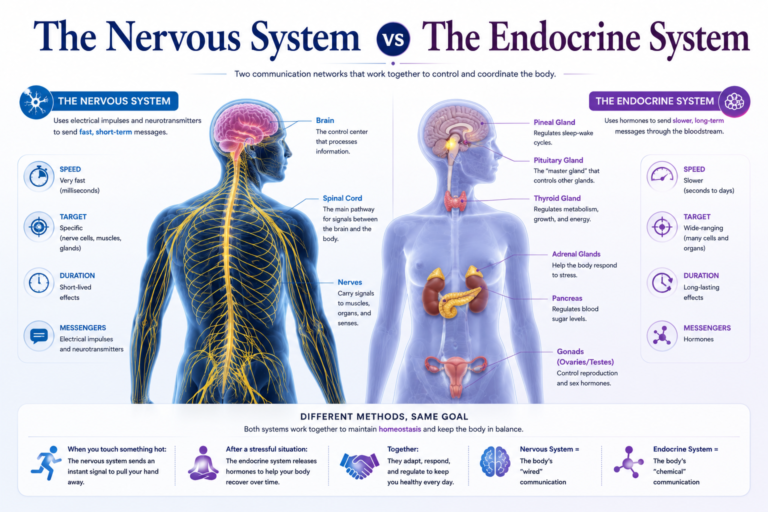
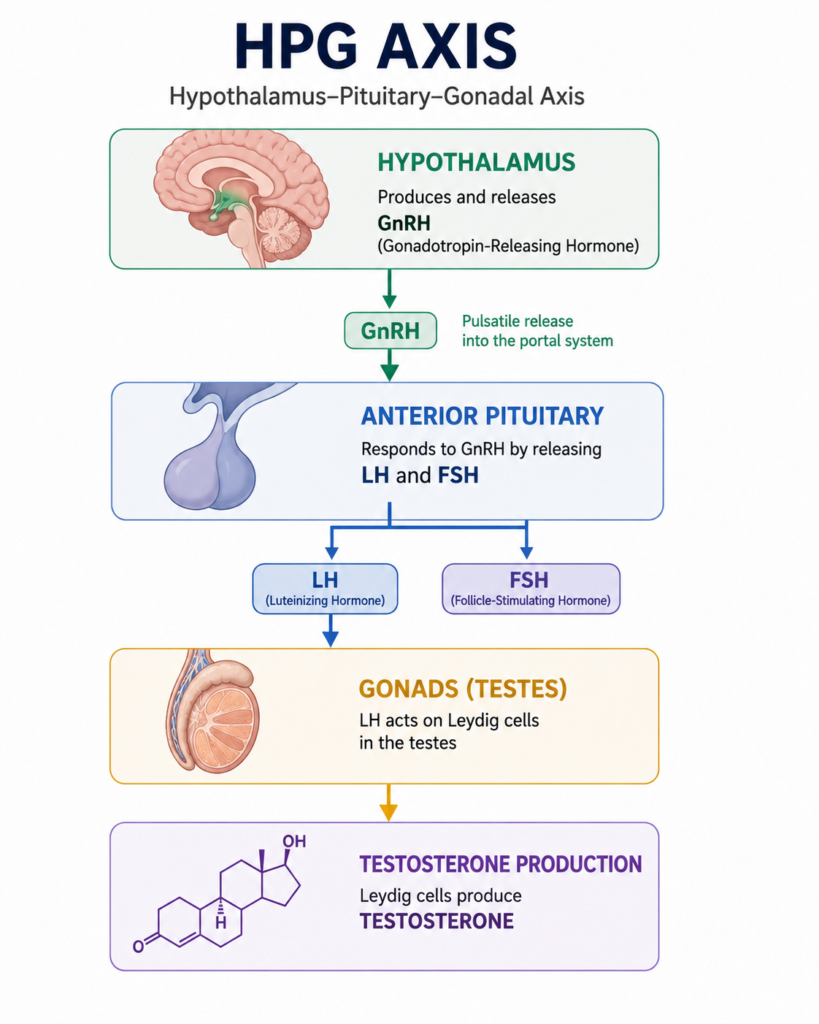
Testosterone production is regulated by the hypothalamic-pituitary-gonadal (HPG) axis:
- The hypothalamus releases GnRH (gonadotropin-releasing hormone).
- GnRH stimulates the pituitary to release LH (luteinizing hormone) and FSH (follicle-stimulating hormone).
- LH stimulates Leydig cells (in men) or theca cells (in women) to produce testosterone.
- Rising testosterone feeds back to inhibit GnRH and LH secretion — negative feedback control.
Testosterone and Muscle Development
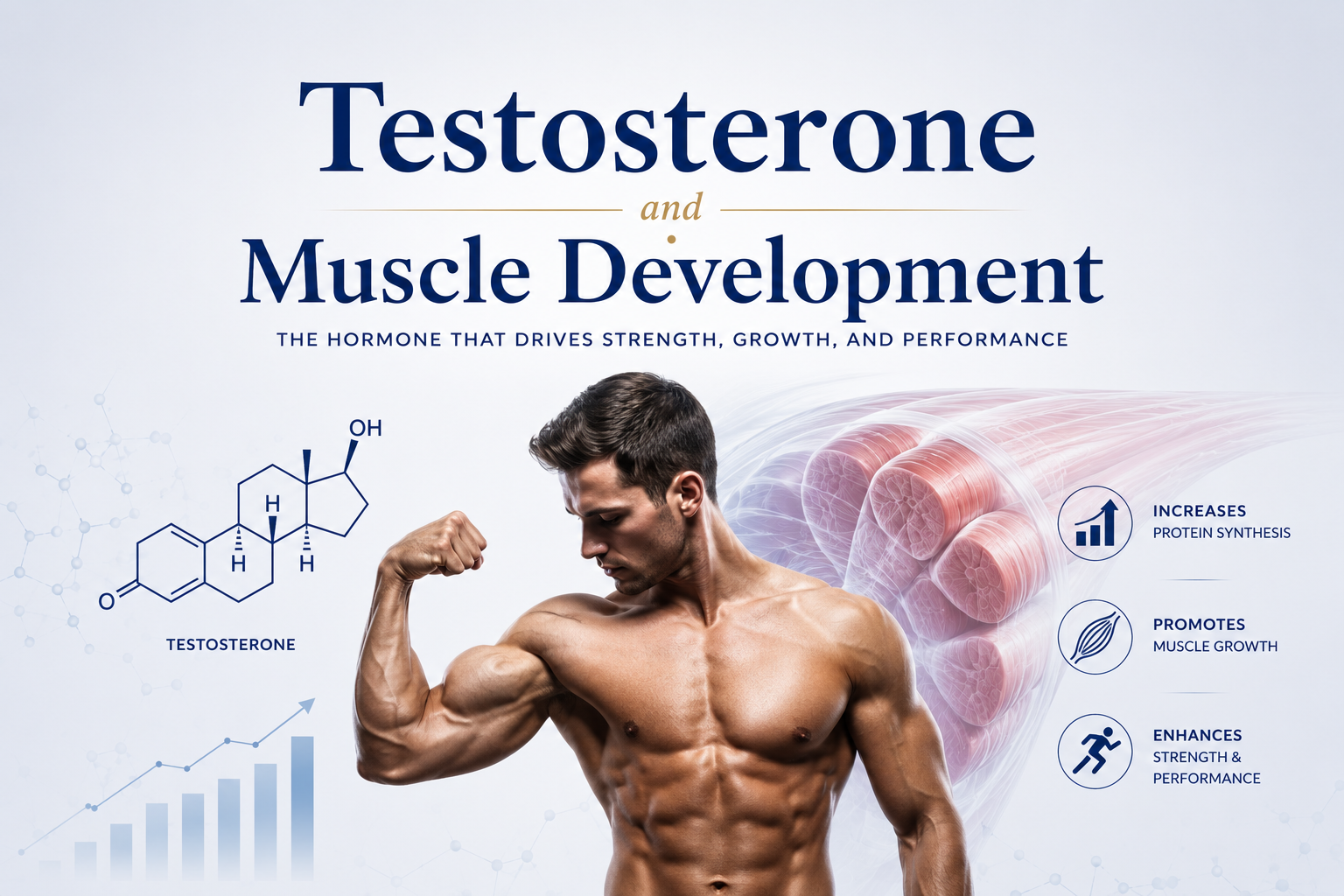
Testosterone’s effects on skeletal muscle are the most relevant for physical therapy:
Increased muscle protein synthesis: Testosterone binds to androgen receptors in muscle cells (and in satellite cells) and activates gene expression programs that increase the production of muscle proteins — particularly actin and myosin. This is the fundamental mechanism of testosterone-driven muscle growth.
Activation of satellite cells: Testosterone stimulates the proliferation and differentiation of satellite cells — the muscle stem cells responsible for muscle repair and growth. Higher testosterone levels mean more satellite cell activity and therefore greater regenerative capacity after muscle injury or exercise-induced damage.
Neuromuscular effects: Testosterone influences the nervous system’s control of muscle — affecting motor neuron function, neuromuscular junction efficiency, and motor unit recruitment patterns. These effects contribute to increased strength and power, independent of changes in muscle size.
Anti-glucocorticoid effects: Testosterone directly opposes some of the catabolic effects of cortisol on muscle — reducing protein breakdown rates and protecting muscle mass during stress. This anti-catabolic effect is particularly important during rehabilitation from surgery or injury, when cortisol levels are often elevated.
The muscle-building effects of testosterone are why the difference in average upper-body muscle mass between men and women is approximately 40-50% (primarily driven by testosterone), even when women train at the same relative intensity as men. However, women still respond robustly to resistance training — gaining proportional strength and functional capacity, just from a different hormonal baseline.
Testosterone and Bone Density
Testosterone (and estrogen derived from testosterone through aromatization) is essential for maintaining bone density throughout life.
Testosterone supports bone health by:
- Stimulating osteoblast activity — promoting bone matrix deposition.
- Inhibiting osteoclast activity — reducing bone resorption.
- Contributing to the periosteal expansion that gives male bones their characteristic larger cross-sectional size (providing greater structural strength).
Low testosterone in men (hypogonadism) significantly increases fracture risk. Men with low testosterone have substantially lower bone mineral density than age-matched men with normal levels — a condition analogous to osteoporosis in postmenopausal women, though less well-recognized clinically.
Physical therapy for patients with testosterone deficiency includes weight-bearing and resistance exercises specifically designed to stimulate bone remodeling — osteogenic loading. Walking, jumping, stair climbing, and resistance training all generate bone-stimulating mechanical forces that partially compensate for reduced hormonal stimulation of bone formation.
Testosterone and Connective Tissue
Testosterone influences the mechanical properties of tendons and ligaments. Higher testosterone levels are associated with stiffer tendons — which increases the efficiency of force transmission from muscle to bone during rapid movements but may also reduce tendon resilience during prolonged, repetitive loading.
This may partly explain observed sex differences in injury rates: women (with lower testosterone) tend to have more compliant (flexible) tendons and ligaments, which may increase ACL injury risk in certain sports contexts but may also provide protective resilience in other scenarios. Physical therapy addresses these connective tissue characteristics through tailored neuromuscular training programs that optimize joint stability regardless of hormonal profile.
Hypogonadism and Physical Therapy
Hypogonadism — clinically low testosterone — is increasingly common, particularly in older men. Conditions associated with low testosterone include:
- Age-related decline (andropause): Testosterone levels decline by approximately 1-2% per year after age 30-40 in men.
- Obesity: Adipose tissue converts testosterone to estrogen (aromatization), reducing net testosterone levels.
- Chronic disease: Diabetes, chronic kidney disease, and inflammatory conditions suppress the HPG axis.
- Medications: Opioids, glucocorticoids, and some other drugs suppress testosterone production.
In physical therapy patients with hypogonadism, the reduced anabolic hormonal environment means:
- Slower muscle protein synthesis in response to resistance training.
- Reduced satellite cell activity and slower muscle repair after injury.
- Greater risk of muscle atrophy during immobilization.
- Reduced bone density and higher fracture risk.
Physical therapists working with hypogonadal patients should be aware of these limitations and adjust progression expectations accordingly, while ensuring that the therapeutic exercise program provides maximal stimulation of the available anabolic responses.
How Exercise Influences Testosterone
Exercise — particularly resistance training — acutely and chronically influences testosterone levels:
Acute testosterone response: A single session of heavy resistance training produces a transient spike in testosterone levels, peaking within 15-30 minutes after exercise. The magnitude of this response is greater with:
- Higher training volumes (more sets).
- Greater muscle mass involved (compound exercises like squats and deadlifts produce larger responses than isolation exercises).
- Higher intensities (heavier loads produce greater hormonal response than lighter loads).
- Shorter rest intervals (metabolic stress amplifies the hormonal response).
Chronic adaptations: Long-term resistance training programs maintain testosterone levels and attenuate the age-related decline. Regular physical activity is associated with higher resting testosterone in both men and women compared to sedentary individuals.
Overtraining and testosterone suppression: Excessive training volume without adequate recovery can suppress testosterone levels — a phenomenon called overreaching or overtraining syndrome. This hormonal suppression contributes to the fatigue, reduced performance, and increased injury risk characteristic of overtraining. Physical therapists manage training load carefully to avoid this outcome.
Sex Differences in Rehabilitation
Understanding testosterone’s role helps explain some of the sex differences seen in rehabilitation:
- Men typically gain muscle mass faster in response to resistance training (higher testosterone).
- Women tend to have greater flexibility (lower testosterone, more estrogen effects on connective tissue).
- Recovery from muscle-damaging exercise appears similar between sexes, despite hormonal differences — suggesting that estrogen may play a protective role in women that partially offsets lower testosterone.
- Bone loss after injury-related immobilization is more rapid in older men with low testosterone and postmenopausal women with low estrogen — making early remobilization especially important in these populations.
Conclusion
Testosterone is a central player in musculoskeletal health and rehabilitation. Its effects on muscle protein synthesis, satellite cell activation, bone density, and connective tissue properties directly influence how quickly and completely patients recover from injury or surgery.
Physical therapy engages with testosterone physiology through resistance exercise prescription (which stimulates testosterone secretion), progressive loading (which takes advantage of testosterone-driven anabolic signaling), and the management of overall training load (which avoids the testosterone suppression of overtraining). Understanding these interactions helps both physical therapists and patients approach rehabilitation with a deeper appreciation of the hormonal biology underlying recovery.
References
- Hall, J.E., & Hall, M.E. (2020). Guyton and Hall Textbook of Medical Physiology (14th ed.). Elsevier.
- Costanzo, L.S. (2022). Physiology (7th ed.). Elsevier.
Disclaimer: This article is for educational purposes only and does not constitute medical advice. Always consult a qualified healthcare professional for personal health concerns.
The site is written and curated by Paul Morgan, a graduate in Physiotherapy (2026), with a particular interest in cardiorespiratory and musculoskeletal physical therapy. Every article on this site is grounded in academic physiology and physical therapy coursework. Content reviewed for clinical accuracy before publishing.