Glycolysis Explained: How Sugar Powers Your Muscles During Physical Therapy
Understand glycolysis — how glucose is broken down to power muscles — and why this metabolic pathway is central to exercise capacity and physical therapy rehabilitation.
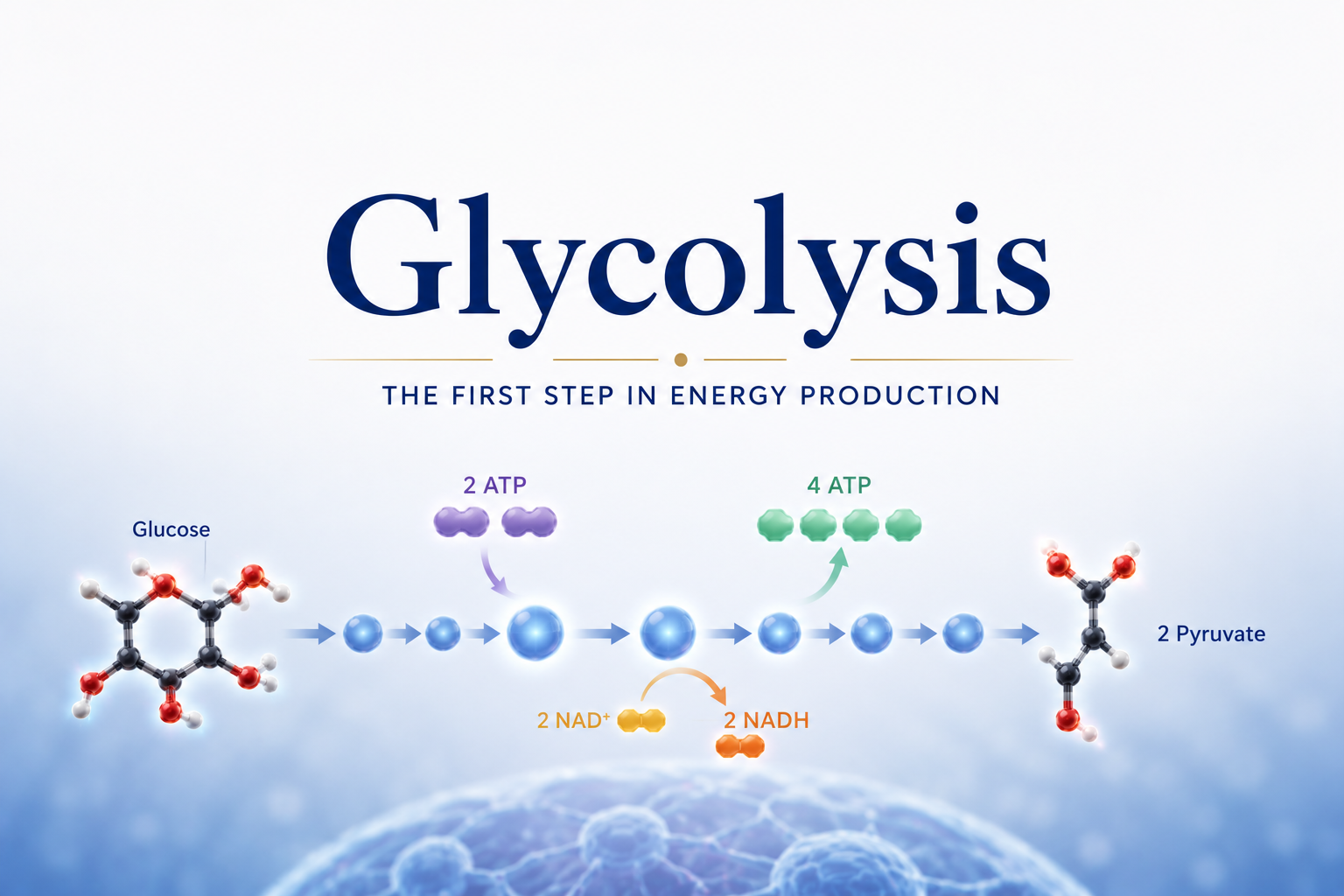
Every time a muscle contracts — whether during a therapeutic exercise session, a walk in the park, or an intense rehabilitation drill — glucose is being broken down to provide energy. The metabolic pathway responsible for this is called glycolysis: a sequence of ten enzyme-catalyzed reactions that converts one glucose molecule into two pyruvate molecules, generating ATP in the process.
Glycolysis is one of the oldest metabolic pathways in evolution — found in nearly all living organisms — and it is central to human exercise physiology. Understanding how it works helps explain muscle fatigue, the burning sensation during hard exercise, the importance of carbohydrate nutrition, and how physical therapy programs are designed around the body’s energy systems.
What Is Glycolysis?
The word “glycolysis” comes from the Greek glykys (sweet) and lysis (splitting). It is aptly named: glycolysis literally splits glucose, a 6-carbon sugar, into two 3-carbon molecules of pyruvate.
The entire process occurs in the cytoplasm of the cell — not in the mitochondria — and does not require oxygen. This makes glycolysis an anaerobic pathway, capable of producing ATP even when oxygen delivery to the tissue is insufficient.
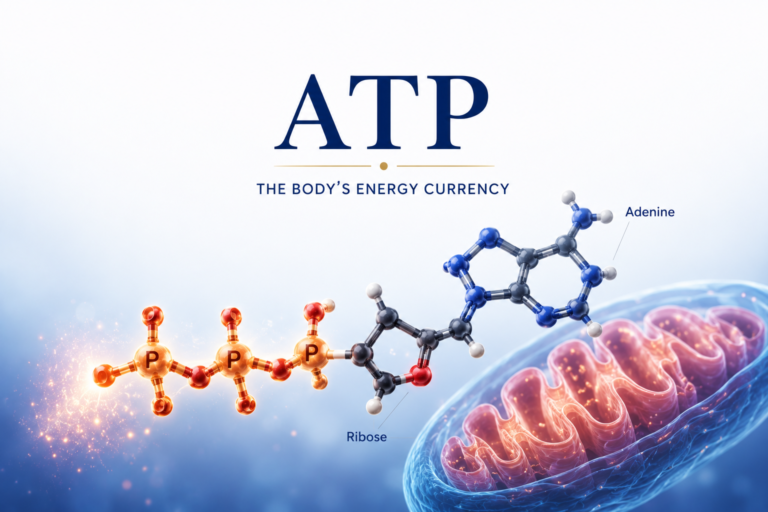
Glycolysis produces a modest yield of ATP compared to aerobic metabolism: a net gain of 2 ATP molecules per glucose molecule (and 2 NADH molecules, which carry electrons). However, it does so rapidly — within fractions of a second of being activated — which is why it is essential for high-intensity exercise where energy demand temporarily outstrips oxygen delivery.
The Two Phases of Glycolysis
Glycolysis can be conceptually divided into two phases:
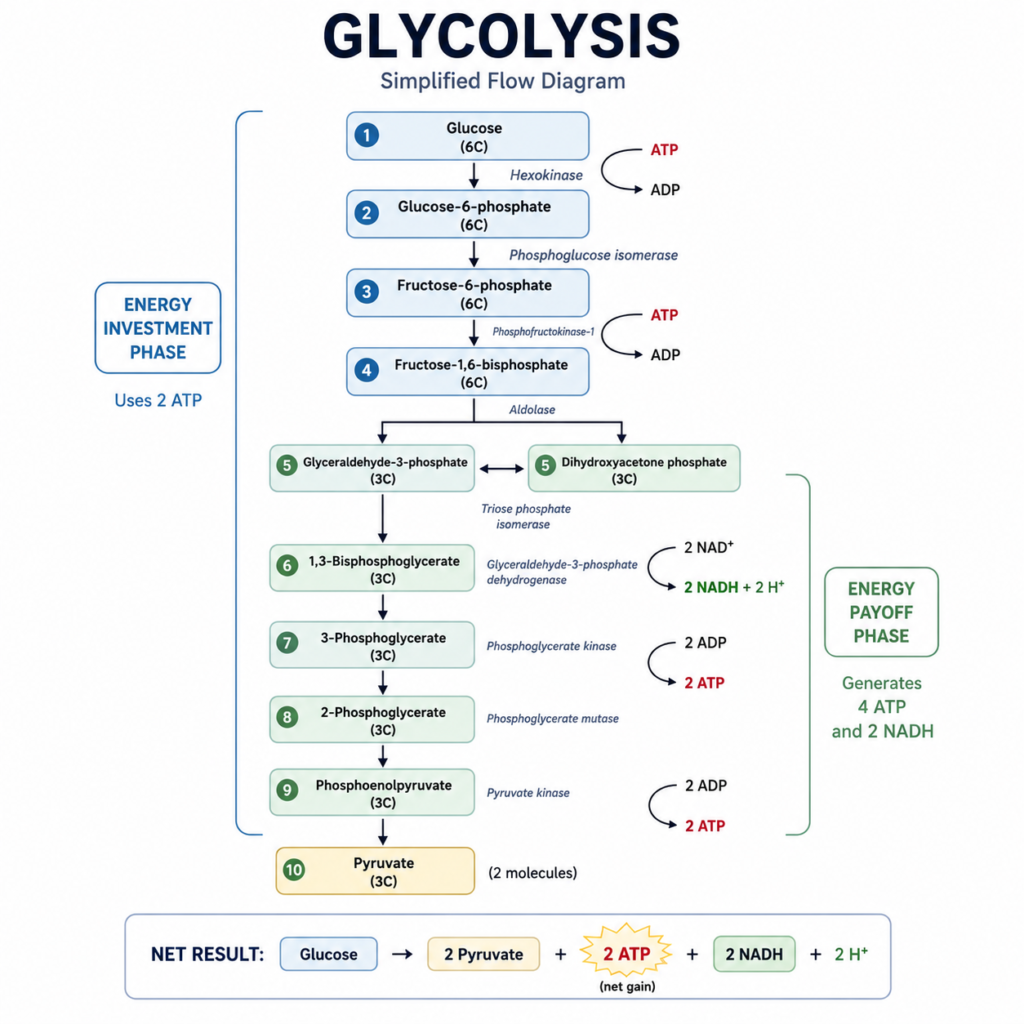
Phase 1 — The Investment Phase (Energy-Consuming): The cell invests 2 ATP molecules to phosphorylate and prepare glucose for splitting. Glucose is first converted to glucose-6-phosphate (trapping it inside the cell), then rearranged to fructose-6-phosphate, and then phosphorylated again to fructose-1,6-bisphosphate. This 6-carbon molecule is then split into two 3-carbon molecules (glyceraldehyde-3-phosphate, G3P).
Phase 2 — The Payoff Phase (Energy-Generating): Each G3P molecule is processed through five more reactions that generate ATP and NADH, ultimately producing pyruvate. Since there are two G3P molecules (from one glucose), this phase yields 4 ATP and 2 NADH.
Net result: 4 ATP produced – 2 ATP invested = 2 net ATP per glucose molecule.
Key regulatory enzymes in glycolysis include hexokinase, phosphofructokinase (PFK), and pyruvate kinase. Phosphofructokinase is particularly important — it is the main control point of glycolysis and is activated by AMP (indicating low energy status) and inhibited by ATP and citrate (indicating high energy status). This elegant feedback control ensures that glycolysis is only activated when the cell actually needs energy.
What Happens to Pyruvate?
The fate of pyruvate — the end product of glycolysis — depends critically on oxygen availability:
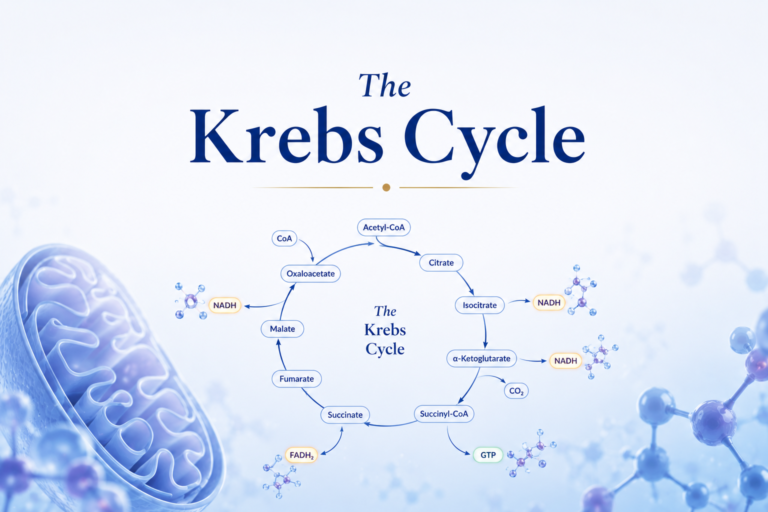
With Oxygen (Aerobic Conditions): Pyruvate enters the mitochondria and is converted to acetyl-CoA by an enzyme complex called pyruvate dehydrogenase. Acetyl-CoA then feeds into the Krebs cycle and oxidative phosphorylation, generating approximately 28-30 more ATP per glucose. This is the predominant pathway during moderate-intensity, sustained exercise — the type most commonly prescribed in physical therapy sessions.
Without Sufficient Oxygen (Anaerobic Conditions): When exercise intensity is high and oxygen delivery cannot keep up with demand, pyruvate is instead converted to lactate by the enzyme lactate dehydrogenase (LDH). This conversion regenerates NAD⁺ from NADH — essential because NAD⁺ must be continuously available for glycolysis to keep running.
Lactate is not waste. Despite its poor reputation, lactate is actually a useful molecule. It is transported out of the working muscle and can be taken up by the heart (which preferentially uses lactate as fuel during exercise), the liver (where it is converted back to glucose via the Cori cycle), and other muscles. As exercise intensity decreases or stops, lactate is cleared and metabolized.
The burning sensation during intense exercise is caused by H⁺ ions (from the dissociation of lactic acid), not lactate itself. These H⁺ ions inhibit glycolytic enzymes and contractile proteins, contributing to fatigue. This distinction is physiologically important.
The Lactate Threshold: A Key Marker for Physical Therapy
The lactate threshold (also called the anaerobic threshold) is the exercise intensity at which lactate begins to accumulate in the blood faster than it can be cleared. Above this threshold, lactate and H⁺ accumulate rapidly, leading to increasing acidosis and fatigue.
The lactate threshold is a critically important marker for exercise prescription in physical therapy:
- Exercises below the lactate threshold can be sustained for long periods. They predominantly use aerobic metabolism with moderate glycolytic contribution. These are appropriate for endurance rehabilitation, cardiovascular conditioning, and patients early in their recovery.
- Exercises above the lactate threshold produce rapid fatigue and acidosis. They are used in higher-intensity rehabilitation phases to drive specific adaptations — including improved buffer capacity, higher lactate clearance rates, and increased mitochondrial density.
Training at and around the lactate threshold is particularly effective for improving aerobic capacity. Well-designed rehabilitation programs progressively push this threshold upward — meaning patients can work at higher intensities before acidosis sets in.
Untrained individuals typically reach their lactate threshold at 50-60% of their maximum aerobic capacity. Well-trained athletes may not reach theirs until 80-90%. Physical therapy rehabilitation progressively shifts this threshold, allowing patients to perform more work with less metabolic stress.
Glycolysis and Muscle Fiber Types
Different muscle fiber types rely on glycolysis to different extents:
Type II fast-twitch fibers have high glycolytic capacity — they contain abundant glycolytic enzymes and can produce ATP very rapidly via glycolysis. They are the primary fibers recruited during high-intensity, short-duration exercises. Their high glycolytic rate makes them fatigue quickly.
Type I slow-twitch fibers have lower glycolytic capacity but higher aerobic (oxidative) capacity. They use a mix of aerobic fat metabolism and moderate glycolysis to sustain activity for long periods.
Physical therapy exercises can be designed to target specific fiber types: high-resistance, low-repetition exercises recruit glycolytic Type II fibers; lower-resistance, higher-repetition or endurance exercises predominantly recruit oxidative Type I fibers. Both types need to be addressed in comprehensive rehabilitation.
Glycogen: The Stored Form of Glycolytic Fuel
Glycolysis uses glucose as its substrate, which comes from two sources: blood glucose (from dietary carbohydrates) and glycogen (the stored form of glucose in muscle and liver cells).
Muscle glycogen is the primary fuel for glycolysis during moderate to intense exercise. Glycogen depletion — which occurs after prolonged, intense exercise — is a major cause of fatigue and necessitates adequate recovery time and carbohydrate nutrition for replenishment.
Physical therapy patients engaged in multiple rehabilitation sessions per week must pay attention to glycogen replenishment. Consuming carbohydrates in the recovery window after exercise (within 30-60 minutes) maximizes glycogen resynthesis and supports readiness for the next session.
Practical Takeaways for Physical Therapy Patients
Understanding glycolysis has direct practical value:
- Carbohydrate intake matters. Since glucose and glycogen are the fuels for glycolysis, adequate carbohydrate consumption supports the energy supply for moderate to high-intensity therapeutic exercise.
- Rest intervals have a physiological basis. The burning sensation during high-intensity exercises reflects H⁺ accumulation. Rest periods allow clearance of H⁺ and restoration of pH — physiologically necessary, not just comfortable.
- Fitness improves metabolic efficiency. As aerobic fitness improves, the body becomes better at using oxygen, reducing reliance on anaerobic glycolysis at any given exercise intensity. This is why rehabilitation becomes progressively more comfortable as fitness improves.
Conclusion
Glycolysis is the foundational energy pathway of muscle — ancient, efficient, and essential. It bridges the worlds of carbohydrate nutrition and muscular performance, operating in both aerobic and anaerobic conditions to keep muscles fueled across a wide range of exercise intensities.
For physical therapy practitioners and patients, glycolysis is the biochemical language beneath the experience of burning muscles, fatigue, and recovery. Understanding it transforms rehabilitation from a series of instructions into a scientifically grounded journey through the body’s own energy systems.
References
- Nelson, D.L., & Cox, M.M. (2021). Lehninger Principles of Biochemistry (8th ed.). W.H. Freeman.
- Berg, J.M., Tymoczko, J.L., Gatto, G.J., & Stryer, L. (2019). Biochemistry (9th ed.). W.H. Freeman.
Disclaimer: This article is for educational purposes only and does not constitute medical advice. Always consult a qualified healthcare professional for personal health concerns.
The site is written and curated by Paul Morgan, a graduate in Physiotherapy (2026), with a particular interest in cardiorespiratory and musculoskeletal physical therapy. Every article on this site is grounded in academic physiology and physical therapy coursework. Content reviewed for clinical accuracy before publishing.