ATP: The Universal Energy Currency of the Human Body and Its Role in Physical Therapy
Discover how ATP works as the body’s universal energy currency, how it fuels muscle contractions, and why ATP production is central to physical therapy and rehabilitation.
Every movement you make — lifting your arm, taking a step, contracting a muscle during physical therapy — is powered by a single molecule: adenosine triphosphate, or ATP. Called the “universal energy currency” of life, ATP is the molecule that bridges the gap between energy stored in food and the energy needed to do biological work. Without a continuous supply of ATP, muscle contraction stops, nerve signals fail, and cells cannot survive.
Understanding ATP — what it is, how it is produced, and how its supply limits and shapes physical performance — is fundamental to understanding exercise physiology and the science behind physical therapy. This knowledge helps explain why therapeutic exercise programs are structured the way they are, and why the body responds to rehabilitation in predictable, biological ways.
What Is ATP?
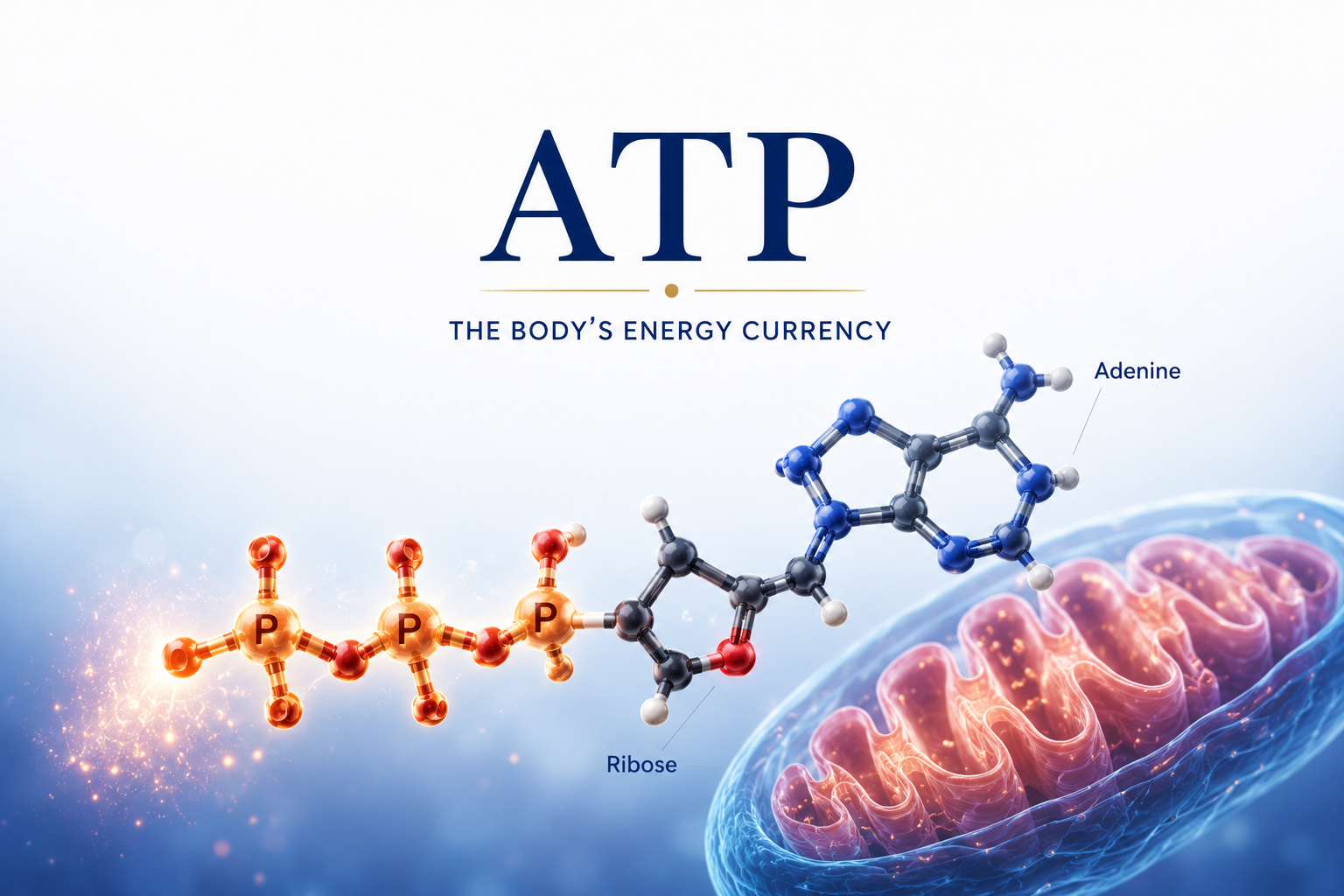
ATP (adenosine triphosphate) is a nucleotide — a molecule composed of a nitrogenous base (adenine), a sugar (ribose), and three phosphate groups linked in a chain. The bond between the second and third phosphate groups is particularly high-energy. When this bond is broken through hydrolysis, it releases approximately 30.5 kJ/mol of free energy — energy that can be harnessed to power cellular work.
The reaction is:
ATP + H₂O → ADP + Pi + Energy
Where ADP is adenosine diphosphate and Pi is inorganic phosphate. The energy released drives processes including:
- Muscle contraction (myosin ATPase uses ATP to power cross-bridge cycling)
- Active transport (Na⁺/K⁺-ATPase uses ATP to maintain ionic gradients)
- Protein synthesis (ribosomes consume ATP to build peptide bonds)
- Cell signaling (ATP is a precursor to cyclic AMP, a second messenger)
- DNA replication and repair
ATP is not a storage molecule — it is a transfer molecule. The total amount of ATP in the body at any given moment is only about 100 grams. Yet a typical person at rest consumes approximately 40 kilograms of ATP per day. This means each ATP molecule is recycled approximately 400-500 times per day. During intense exercise, this turnover accelerates dramatically — a sprinting muscle can consume ATP at a rate of 0.5 kg per minute.
This extraordinary turnover is possible because ADP is continuously regenerated back to ATP through metabolic pathways — primarily cellular respiration.
Three Systems for ATP Production
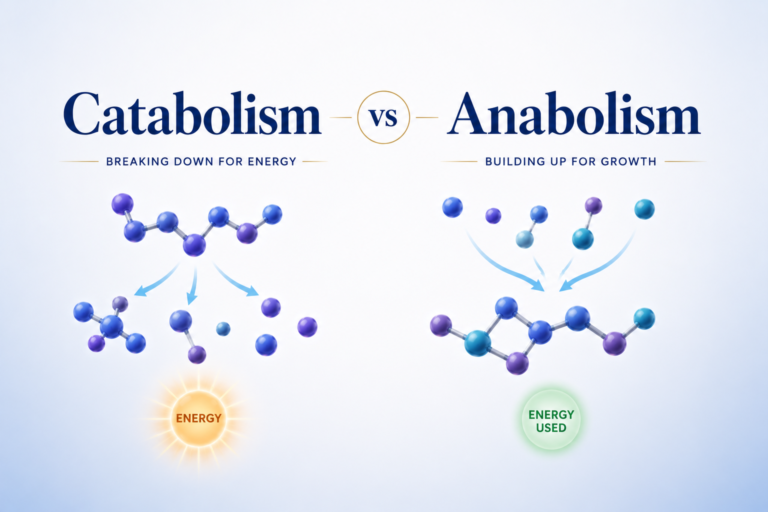
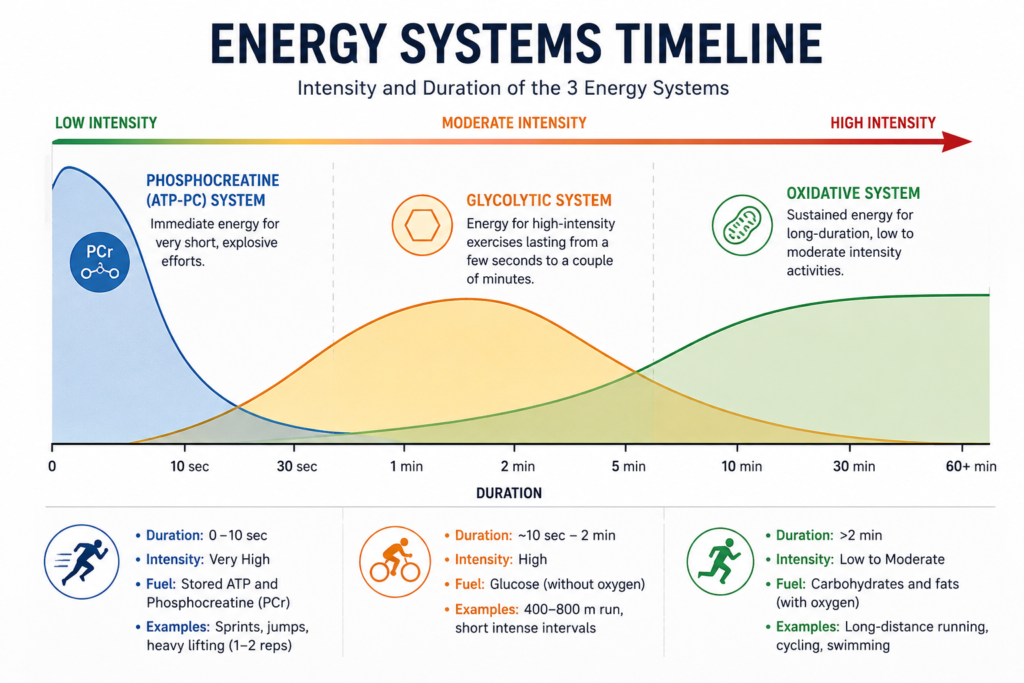
The body has three distinct systems for producing ATP, each operating over a different time frame and using different fuel sources. Understanding these systems helps explain how different types of therapeutic exercise are fueled.
1. The Phosphocreatine (PCr) System — Immediate Energy
The phosphocreatine system provides ATP almost instantaneously, making it the primary fuel for very short, explosive efforts lasting up to about 10 seconds.
Creatine phosphate (PCr) — stored in muscle cells — donates its phosphate group to ADP, regenerating ATP:
PCr + ADP → Cr + ATP (catalyzed by creatine kinase)
This system requires no oxygen and produces no lactate. Its limitation is that PCr stores are small — depleted after roughly 10 seconds of maximal effort. Recovery takes 3-5 minutes of rest, during which oxidative metabolism rebuilds PCr stores.
In physical therapy, movements that rely on this system include short bursts of high-intensity exercise: jumping, rapid stair climbing, heavy resistance training sets. Rest intervals between sets are designed to allow PCr replenishment.
2. Anaerobic Glycolysis — Fast but Finite
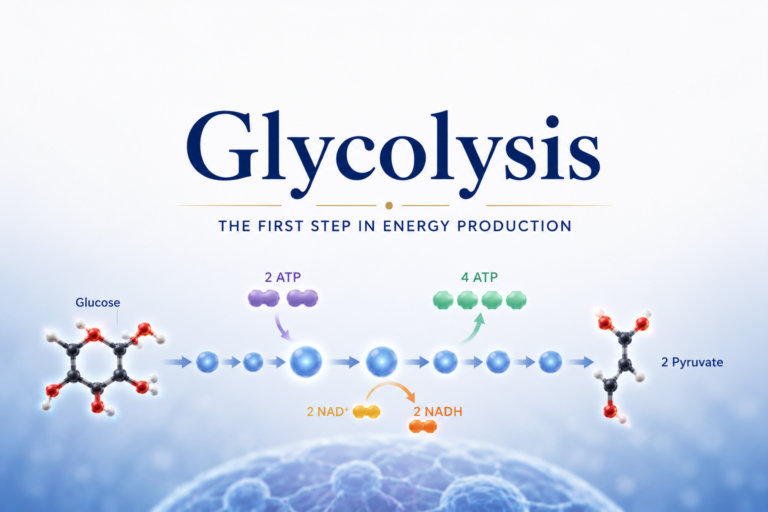
When exercise continues beyond 10 seconds but oxygen delivery cannot keep up with ATP demand, the body relies on anaerobic glycolysis: the rapid breakdown of glucose to pyruvate and then to lactate.
Glucose → 2 Pyruvate → 2 Lactate + 2 ATP
This system is fast (activated within seconds) but produces only 2 ATP per glucose and generates H⁺ ions that lower muscle pH and contribute to fatigue. It dominates during exercise lasting 30 seconds to 2 minutes of high intensity.
In physical therapy, anaerobic glycolysis is recruited during higher-intensity therapeutic exercises: circuit training, sport-specific drills, step-ups with resistance. Managing rest periods allows H⁺ clearance and pH recovery between efforts.
3. Oxidative Phosphorylation — Sustained Power
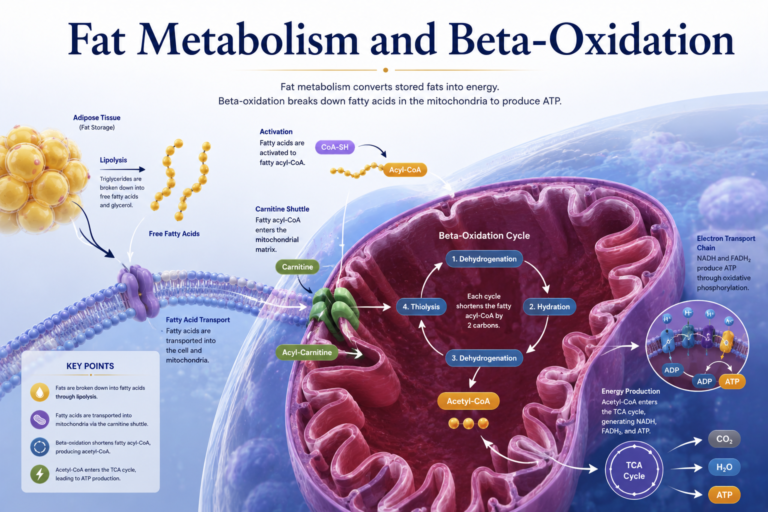
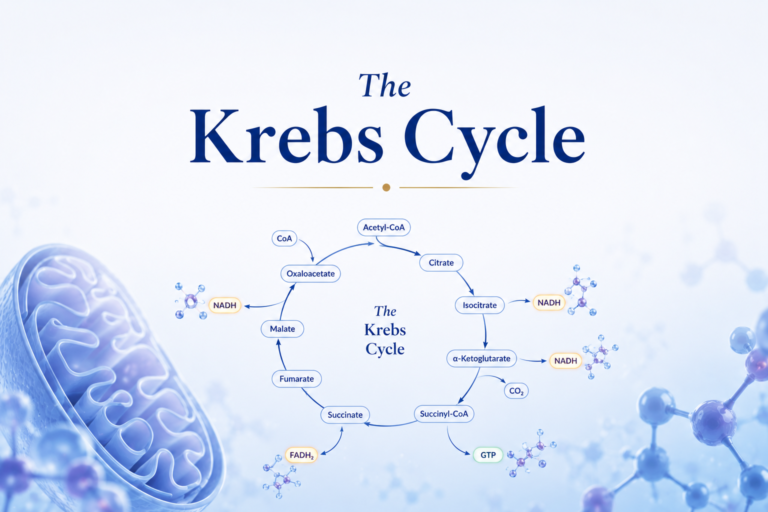
For exercise lasting more than 2 minutes — or for lower-intensity sustained activity — the aerobic system (oxidative phosphorylation in the mitochondria) becomes the primary ATP source. It uses oxygen to completely oxidize carbohydrates and fats, producing up to 30-32 ATP per glucose molecule.
Glucose + 6O₂ → 6CO₂ + 6H₂O + ~30-32 ATP
This system is highly efficient but slower to activate. It powers the majority of physical therapy sessions that involve moderate-intensity sustained activity: aerobic exercise, functional training, prolonged stretching sessions.
Aerobic fitness — the capacity of the heart, lungs, blood, and mitochondria to deliver and use oxygen — determines how long and how intensely the oxidative system can sustain ATP production. Improving aerobic fitness is therefore a key goal in many rehabilitation programs.
ATP and Muscle Contraction
Muscle contraction is one of the largest consumers of ATP in the body. ATP is required at three key steps in the cross-bridge cycle:
- Energizing the myosin head: ATP binds to myosin and is hydrolyzed to ADP + Pi, cocking the myosin head into a high-energy position.
- Detaching myosin from actin: After the power stroke, ATP must bind to myosin to allow it to detach from actin. Without ATP, actin-myosin bonds persist permanently — this is why muscles stiffen in rigor mortis after death, when ATP production ceases.
- Calcium pumping: ATP powers the sarcoplasmic reticulum Ca²⁺-ATPase, which pumps calcium back into storage after contraction, allowing muscle relaxation.
This means that both contraction and relaxation require ATP. Insufficient ATP production impairs not only the ability to generate force but also the ability to relax — contributing to muscle cramping.
Clinical Relevance: ATP Production in Rehabilitation
The three energy systems operate along a continuum, and physical therapy exercises can be designed to target specific systems depending on the rehabilitation goal:
- Rebuilding explosive power (e.g., after ACL reconstruction): Short, high-intensity exercises using the PCr system, with long rest periods.
- Building muscular endurance (e.g., after prolonged immobilization): Moderate-intensity, sustained exercises using aerobic metabolism.
- Improving cardiovascular fitness (e.g., in cardiac or respiratory rehabilitation): Sustained aerobic exercise that taxes oxidative phosphorylation.
Conditions that impair mitochondrial function — including aging, prolonged immobilization, and some medications — reduce the body’s aerobic ATP production capacity. Physical therapy programs specifically address this by progressively challenging the aerobic system, stimulating mitochondrial biogenesis.
ATP, Fatigue, and Recovery
Fatigue during therapeutic exercise is multifactorial, but reduced ATP availability is a central contributor, particularly during prolonged or high-intensity sessions. As PCr and glycogen are depleted and metabolic byproducts accumulate, the rate of ATP regeneration falls below the rate of consumption — and muscle performance declines.
Recovery from exercise-induced fatigue requires time for:
- PCr stores to be replenished (3-5 minutes for full recovery)
- Glycogen to be resynthesized (12-24 hours with adequate carbohydrate intake)
- Mitochondrial function to be restored
- Byproducts (H⁺, Pi) to be cleared
Physical therapy programs account for these timescales in structuring session frequency, rest periods, and recovery between training days.
Conclusion
ATP is the irreplaceable molecular link between the energy stored in food and the energy required for every movement, every cellular process, and every moment of recovery. It is produced through three complementary systems that operate across different time frames and intensities — and each system is trainable, adaptable, and responsive to physical therapy.
Understanding ATP illuminates why rehabilitation exercises are prescribed at specific intensities, why rest matters, why aerobic fitness accelerates recovery, and why nutrition directly affects rehabilitation performance. Every therapeutic session is, at its biochemical core, an exercise in ATP management.
References
- Nelson, D.L., & Cox, M.M. (2021). Lehninger Principles of Biochemistry (8th ed.). W.H. Freeman.
- Berg, J.M., Tymoczko, J.L., Gatto, G.J., & Stryer, L. (2019). Biochemistry (9th ed.). W.H. Freeman.
Disclaimer: This article is for educational purposes only and does not constitute medical advice. Always consult a qualified healthcare professional for personal health concerns.
The site is written and curated by Paul Morgan, a graduate in Physiotherapy (2026), with a particular interest in cardiorespiratory and musculoskeletal physical therapy. Every article on this site is grounded in academic physiology and physical therapy coursework. Content reviewed for clinical accuracy before publishing.