The Nervous System vs The Endocrine System: Speed, Control, and Physical Therapy
Compare how the nervous and endocrine systems regulate body functions, what each contributes to physical therapy outcomes, and how therapeutic interventions target both systems.
The human body’s internal communication relies on two master control systems: the nervous system and the endocrine system. Both systems detect changes in the body’s internal and external environment and coordinate responses that maintain homeostasis and enable normal function. But they operate very differently — at different speeds, over different distances, with different mechanisms, and with different durations of effect.
For physical therapy practitioners and patients, understanding both systems and how they interact is essential. Pain perception, motor control, healing, adaptation to exercise, and the psychological experience of rehabilitation all involve intricate interplay between the nervous and endocrine systems. Many therapeutic interventions — from manual therapy to therapeutic exercise to pain education — target one or both systems.
The Nervous System: Fast, Precise, and Short-Lived
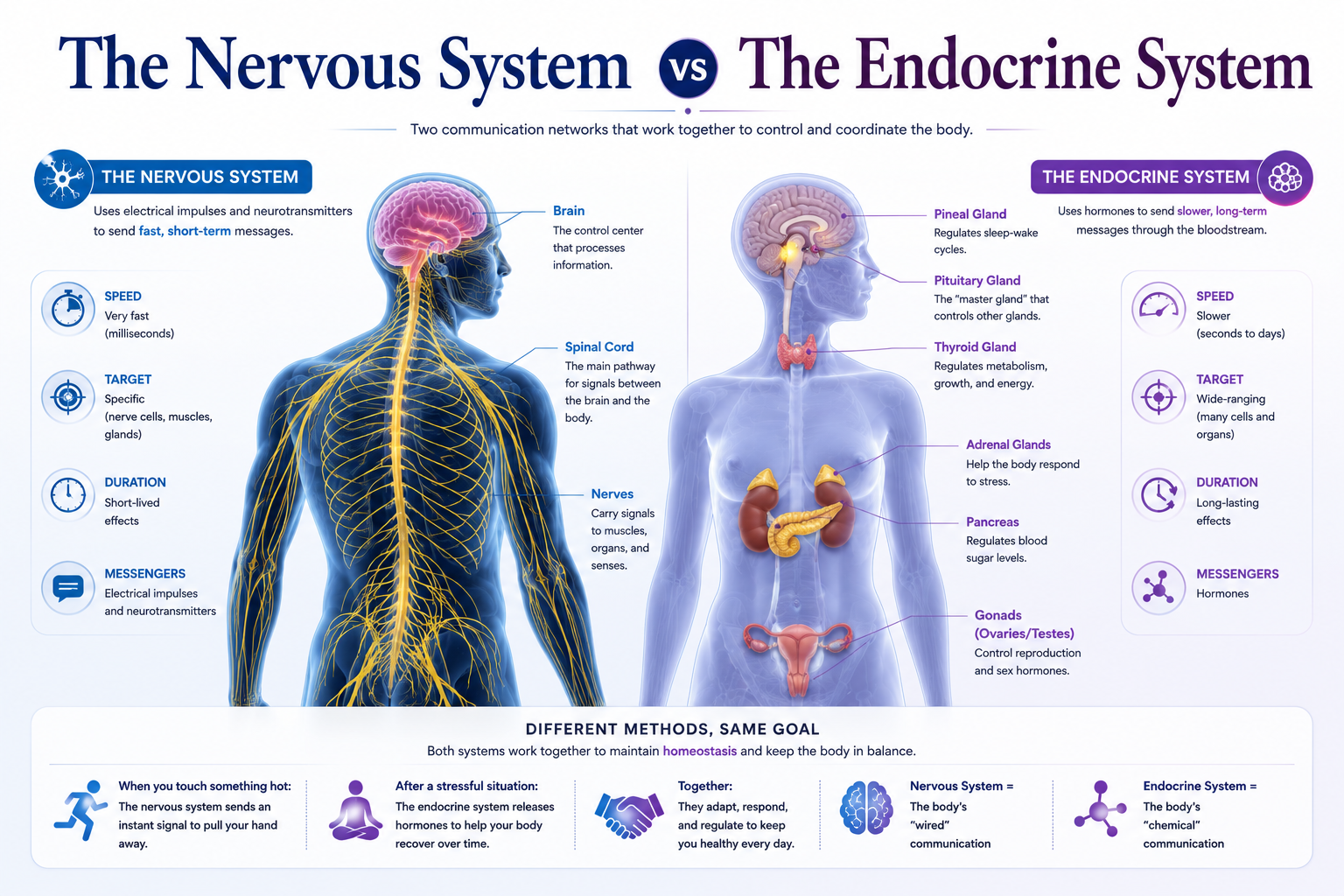
The nervous system communicates through electrical signals (action potentials) that travel along neurons at speeds ranging from 0.5 m/s (in unmyelinated pain fibers) to 120 m/s (in heavily myelinated motor neurons). This makes it the body’s rapid-response communication network.
Structure: The nervous system is divided into:
- Central nervous system (CNS): Brain and spinal cord. Processes information and coordinates responses.
- Peripheral nervous system (PNS): All nerves outside the CNS, including sensory nerves (carrying information to the CNS) and motor nerves (carrying commands from the CNS to effectors).
The PNS is further divided into the somatic nervous system (voluntary motor control and conscious sensation) and the autonomic nervous system (involuntary control of internal organs, glands, and smooth muscle). The autonomic system has two subdivisions:
- Sympathetic: “Fight or flight” — prepares the body for stress or action.
- Parasympathetic: “Rest and digest” — promotes recovery and restoration.
Communication mechanism: Neurons communicate with each other and with target tissues (muscles, glands) through chemical signals called neurotransmitters, released at junctions called synapses. Neurotransmitters bind to receptors on the target cell, producing rapid, highly localized effects. Key neurotransmitters in physical therapy include:
- Acetylcholine: Activates skeletal muscle contraction at the neuromuscular junction; also the primary parasympathetic neurotransmitter.
- Norepinephrine: The primary sympathetic neurotransmitter; also functions as a brain neuromodulator.
- Dopamine: Involved in motor control (disrupted in Parkinson’s disease), motivation, and reward.
- Serotonin: Involved in mood regulation, pain modulation, and sleep.
- Glutamate and GABA: The main excitatory and inhibitory neurotransmitters in the CNS, critical for pain processing and motor control.
Characteristics: Nervous system responses are rapid (milliseconds), highly specific (targeting individual cells), and short-lived (lasting milliseconds to seconds, though neuroplastic changes can be permanent).
The Endocrine System: Slow, Diffuse, and Sustained
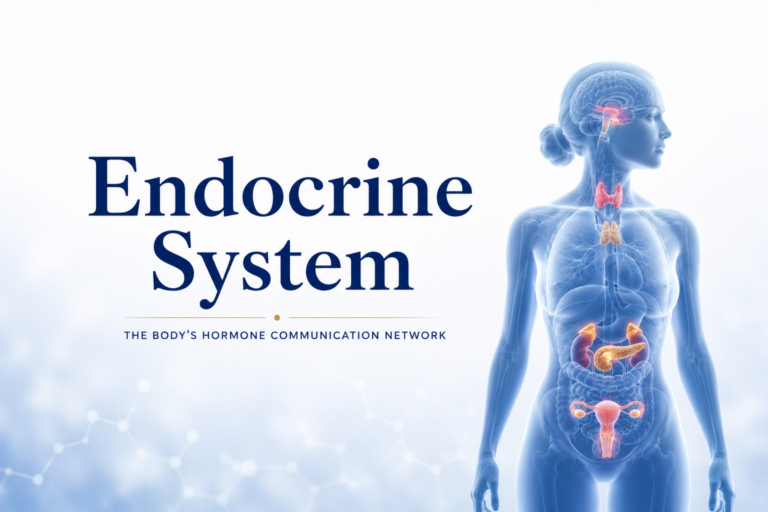
The endocrine system communicates through chemical messengers called hormones, released into the bloodstream and transported throughout the body to reach target cells anywhere that have the appropriate receptors. This makes it a slower but far-reaching communication system.
Structure: The endocrine system consists of glands (hypothalamus, pituitary, thyroid, adrenal, pancreas, gonads) and endocrine cells scattered throughout other organs. The hypothalamus serves as the critical interface between the nervous and endocrine systems — it receives neural input from the brain and responds by releasing hormones that regulate the pituitary gland, which in turn controls most other endocrine glands.
Communication mechanism: Hormones are released in response to neural signals, other hormones, or direct detection of blood chemistry (e.g., pancreatic beta cells detecting blood glucose). They travel through the bloodstream and bind to specific receptors on target cells — either on the cell surface (for water-soluble hormones) or inside the cell (for lipid-soluble steroid hormones). The effects are slower to develop (minutes to hours), systemic rather than localized, and generally longer-lasting (minutes to days).
Characteristics: Endocrine responses are slow, wide-reaching, and sustained — ideal for regulating longer-term processes like growth, metabolism, reproduction, and chronic stress responses.
Key Differences at a Glance
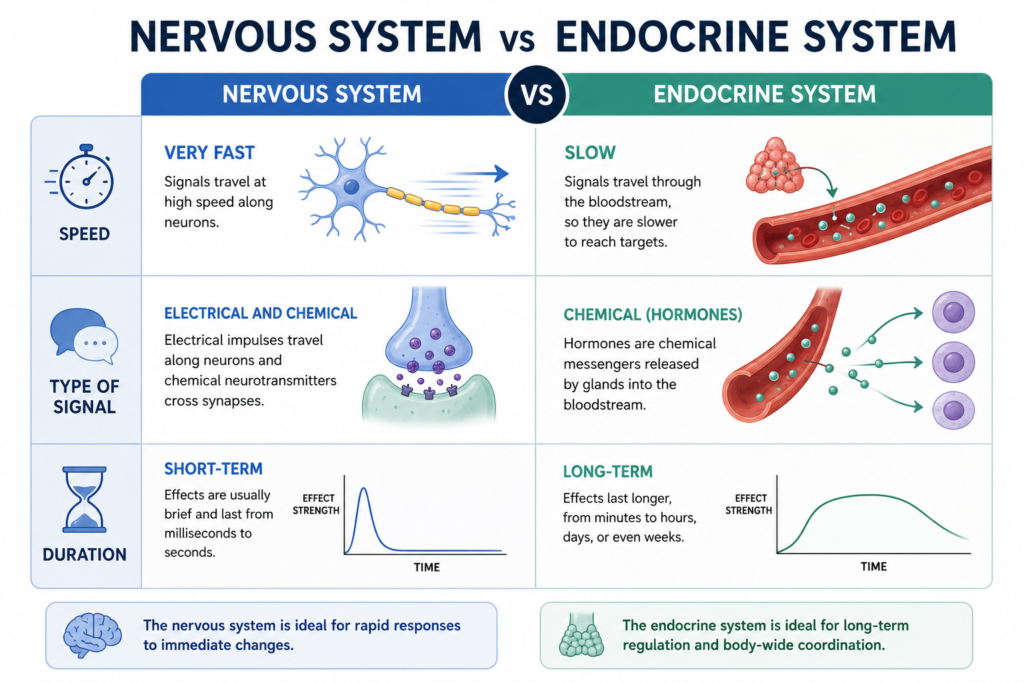
| Feature | Nervous System | Endocrine System |
|---|---|---|
| Signal type | Electrical (action potentials) + chemical (neurotransmitters) | Chemical (hormones) |
| Speed | Milliseconds | Minutes to hours |
| Range | Highly specific targets | Systemic (all cells with receptors) |
| Duration | Milliseconds to seconds | Minutes to days |
| Main control | Movement, sensation, rapid responses | Metabolism, growth, reproduction |
How Both Systems Work Together
The nervous and endocrine systems are deeply interconnected — so much so that the field studying their interaction is called neuroendocrinology.
The hypothalamus is the master integrator. It receives sensory information from the body and the environment, processes emotional and cognitive input from higher brain centers, and responds by modulating both the autonomic nervous system and the pituitary gland (which controls most endocrine function). This is why psychological states — stress, anxiety, depression — have measurable effects on hormonal levels.
The stress response illustrates the interplay perfectly:
- A threat is perceived by the brain.
- The sympathetic nervous system activates immediately, releasing norepinephrine and triggering the adrenal medulla to release epinephrine (adrenaline) — producing rapid cardiovascular, metabolic, and behavioral changes within seconds.
- Simultaneously, the HPA axis activates. The hypothalamus releases CRH → the pituitary releases ACTH → the adrenal cortex releases cortisol — a response that takes minutes but sustains the stress adaptation for hours.
The acute phase (epinephrine) is controlled by the nervous system; the sustained phase (cortisol) by the endocrine system.
Physical Therapy and the Nervous System
Many physical therapy interventions directly target the nervous system:
Motor learning and neuromuscular re-education: Repeated, task-specific exercise strengthens specific neural circuits through long-term potentiation — a form of synaptic plasticity that is the cellular basis of motor learning. This is the foundation of neurological rehabilitation and the reason why specific movement patterns must be practiced to be restored.
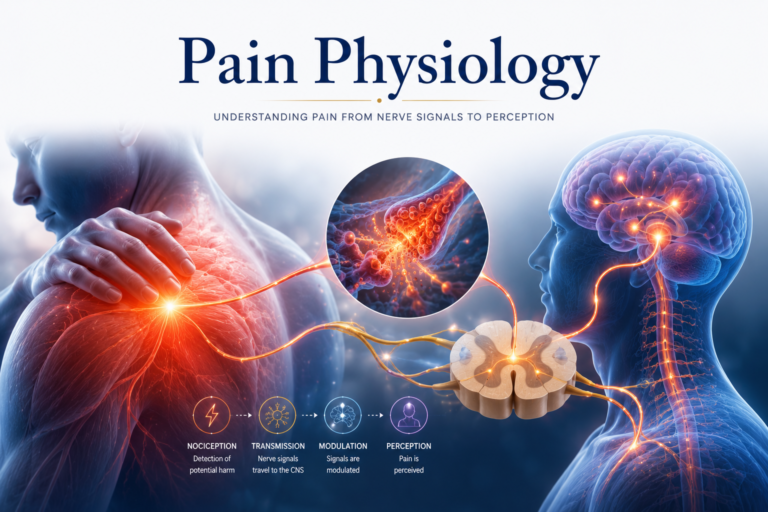
Pain modulation: Manual therapy, exercise, and transcutaneous electrical nerve stimulation (TENS) modulate pain signals at the spinal cord level through gate control mechanisms and by stimulating the release of endogenous opioids (endorphins and enkephalins) in the brain.
Proprioceptive training: Balance and coordination exercises retrain proprioceptive pathways — helping the nervous system rebuild accurate body position sense after joint injury or surgery.
Autonomic regulation: Deep breathing, relaxation techniques, and exercise modulate the balance between sympathetic and parasympathetic activity — shifting toward parasympathetic dominance (rest and recovery mode) during rehabilitation.
Physical Therapy and the Endocrine System
Physical therapy also powerfully influences the endocrine system:
Exercise-induced hormonal responses: Resistance training stimulates testosterone and growth hormone secretion. Aerobic exercise improves insulin sensitivity. Regular exercise reduces baseline cortisol levels in chronically stressed individuals.
Pain management effects on cortisol: Effective pain management in physical therapy reduces the ongoing stress response, lowering cortisol levels and creating a more anabolic hormonal environment for healing.
Sleep optimization: Physical therapy education about sleep hygiene and the establishment of regular physical activity patterns improve sleep quality — maximizing the growth hormone secretion that occurs during deep sleep.
Conclusion
The nervous and endocrine systems are the body’s two great communication networks — the nervous system providing rapid, precise, short-lived signals that control immediate function, and the endocrine system providing slower, systemic, sustained hormonal signals that regulate long-term processes like growth and recovery.
Physical therapy engages both systems simultaneously — stimulating neural adaptation through exercise and motor learning, modulating hormonal environments through activity and stress management, and addressing the interactions between pain, stress hormones, and healing. Understanding both systems helps practitioners design more complete, effective rehabilitation programs — and helps patients appreciate the profound physiological depth of the therapeutic process.
References
- Hall, J.E., & Hall, M.E. (2020). Guyton and Hall Textbook of Medical Physiology (14th ed.). Elsevier.
- Costanzo, L.S. (2022). Physiology (7th ed.). Elsevier.
Disclaimer: This article is for educational purposes only and does not constitute medical advice. Always consult a qualified healthcare professional for personal health concerns.
The site is written and curated by Paul Morgan, a graduate in Physiotherapy (2026), with a particular interest in cardiorespiratory and musculoskeletal physical therapy. Every article on this site is grounded in academic physiology and physical therapy coursework. Content reviewed for clinical accuracy before publishing.