The Cell Nucleus and DNA: How Genetic Information Controls Tissue Repair
Learn how the cell nucleus and DNA regulate tissue repair, protein synthesis, and muscle regeneration — and why this matters for physical therapy and recovery.
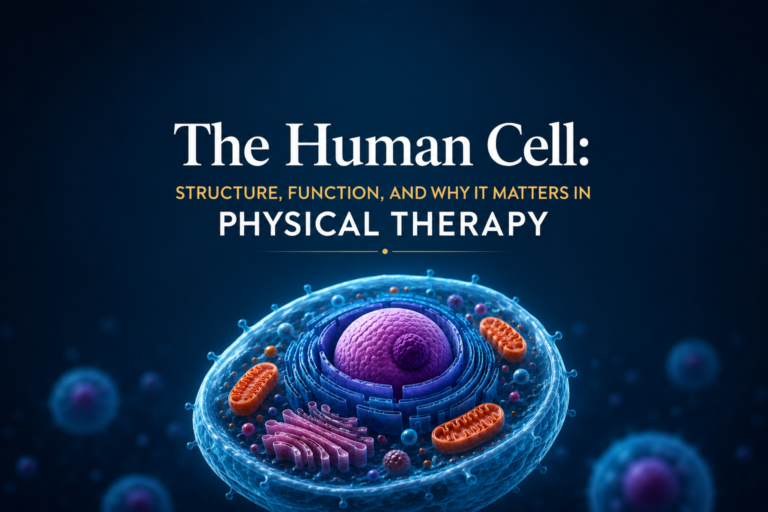
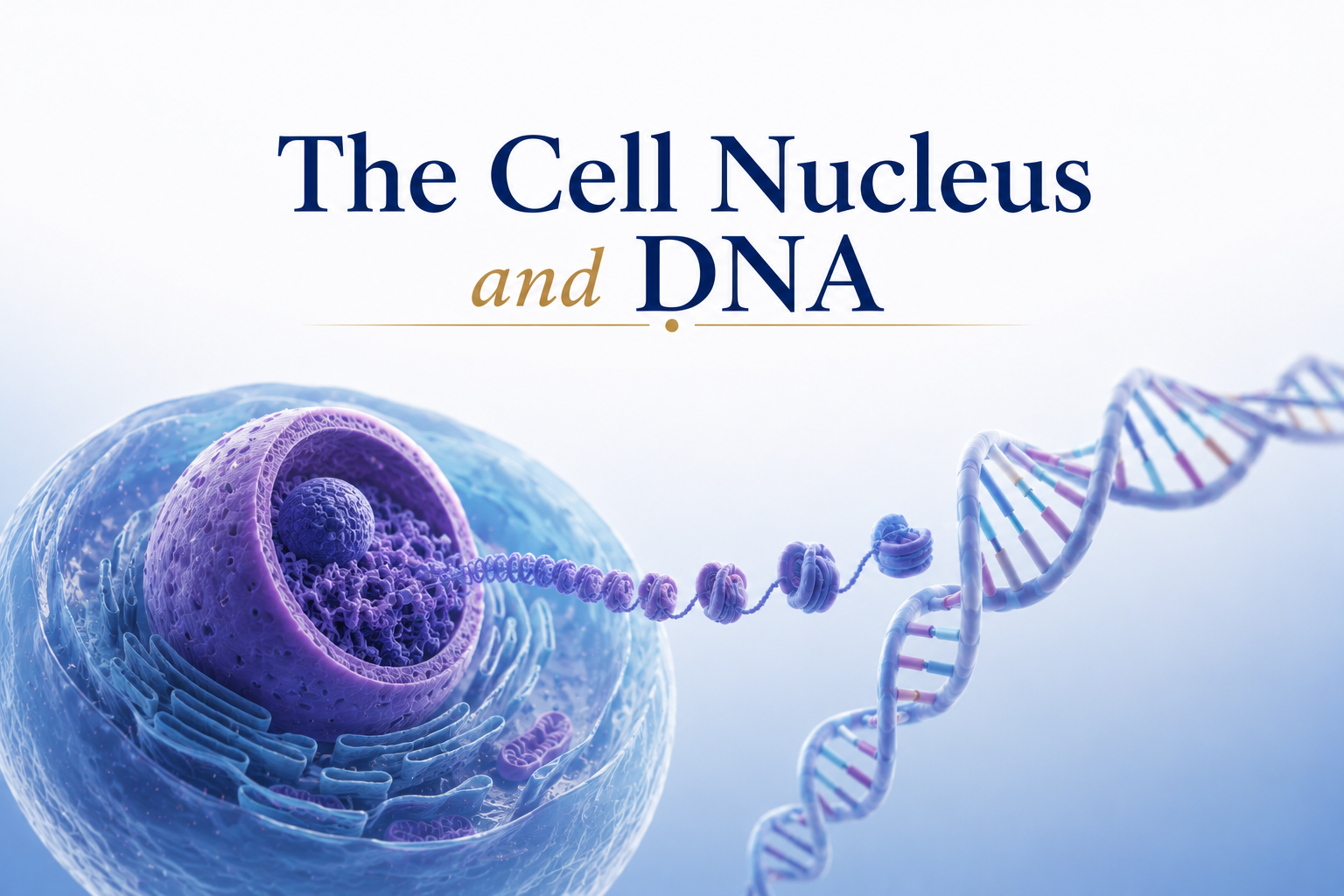
Inside every cell in your body — from the muscle fibers in your thigh to the collagen-producing cells in your tendons — there is a command center. It is the nucleus: a membrane-enclosed compartment that holds the genetic blueprint for building, maintaining, and repairing the entire body. The instructions stored in the nucleus govern whether a damaged muscle fiber rebuilds itself, whether a healing tendon produces enough collagen, and even how the nervous system adapts to therapeutic exercise.
Understanding the role of the cell nucleus and DNA is not just an academic exercise. For anyone interested in physical therapy and rehabilitation, it reveals the molecular foundation of recovery and explains why some interventions work while others fall short.
Structure of the Cell Nucleus
The nucleus is typically the largest organelle in the cell and is found in nearly all human cells. Mature red blood cells are one of the few exceptions — they lose their nucleus during development to maximize space for oxygen-carrying hemoglobin.
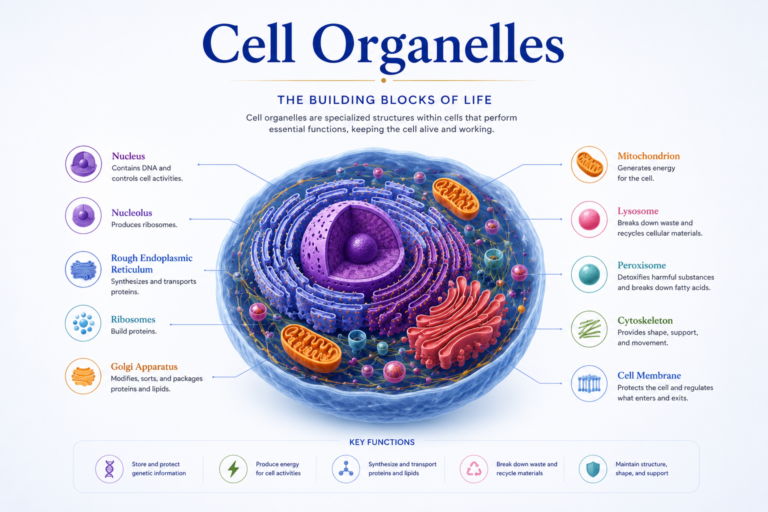
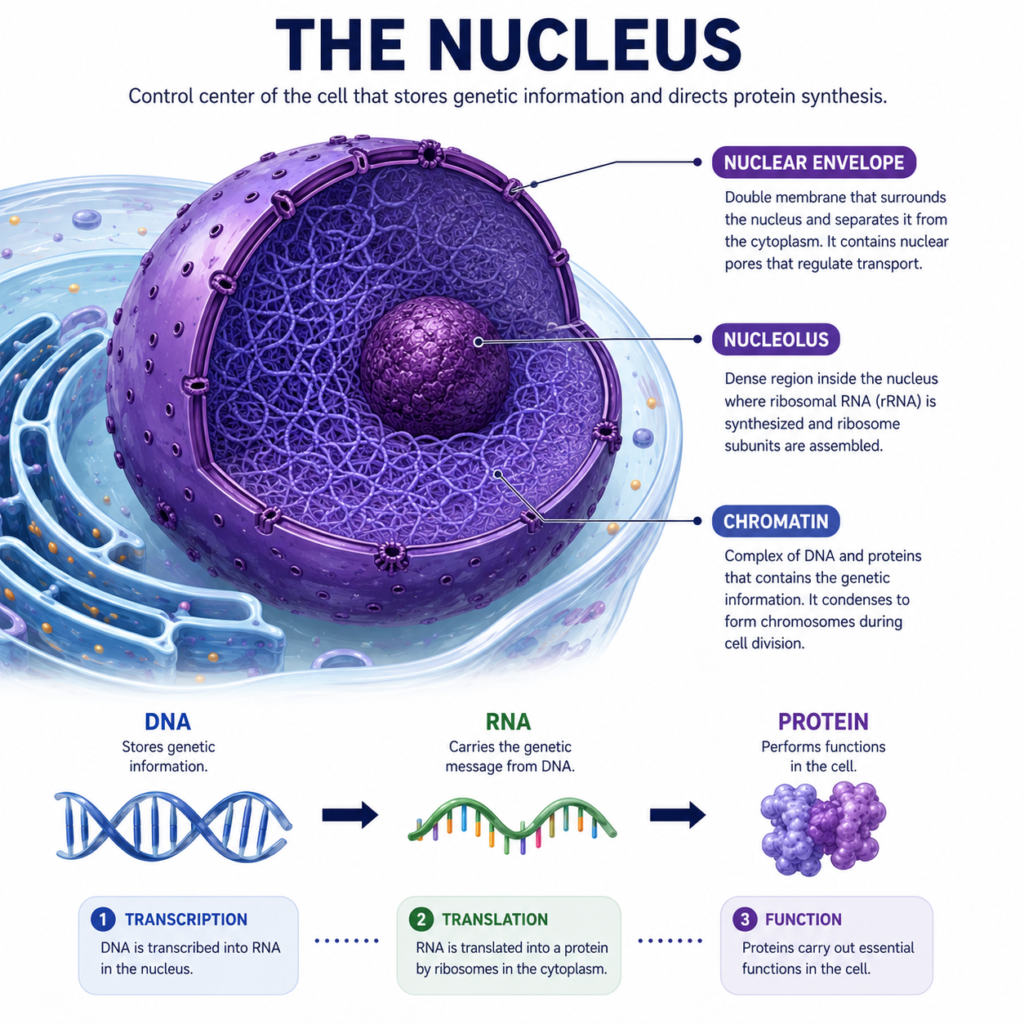
The nucleus is bounded by a nuclear envelope: a double membrane perforated by nuclear pores. These pores act as selective gates, allowing the movement of molecules between the nucleus and the cytoplasm. Messenger RNA (mRNA) — which carries genetic instructions out to the ribosomes — exits the nucleus through these pores, while proteins needed to regulate gene activity enter through them.
Inside the nucleus, the DNA is organized into structures called chromosomes. Human cells contain 46 chromosomes (23 pairs), and each chromosome is made of a long strand of DNA tightly wound around proteins called histones. The degree of winding determines whether a gene is accessible for reading: loosely packed DNA (euchromatin) is actively transcribed, while tightly condensed DNA (heterochromatin) is generally inactive.
A notable structure within the nucleus is the nucleolus — a dense region where ribosomal RNA (rRNA) is synthesized. Ribosomes, assembled here, are the molecular machines that build all the body’s proteins. Cells engaged in active protein synthesis — like those repairing muscle tissue — tend to have large, prominent nucleoli.
DNA: The Blueprint of the Body
DNA (deoxyribonucleic acid) is the molecule that stores all the genetic information needed to build and operate the human body. It is composed of four chemical bases — adenine (A), thymine (T), guanine (G), and cytosine (C) — arranged in specific sequences that encode genetic instructions.
The human genome contains approximately 3 billion base pairs and around 20,000-25,000 genes. A gene is a segment of DNA that contains the instructions for producing a specific protein. Proteins, in turn, are the workhorses of the cell: they form structural components like collagen and actin, act as enzymes that drive chemical reactions, function as receptors and signaling molecules, and carry out virtually every biological process in the body.
The process of reading a gene and producing a protein occurs in two main steps: transcription and translation. During transcription, the DNA sequence of a gene is copied into a messenger RNA (mRNA) molecule inside the nucleus. This mRNA then travels through the nuclear pores into the cytoplasm, where ribosomes read its sequence and build the corresponding protein — a process called translation.
Gene Expression in Tissue Repair
One of the most fascinating aspects of genetics is that not all genes are active all the time. The set of genes that a cell expresses — turns on or off — depends on its type, its environment, and the signals it receives. This regulation of gene expression is what allows a skin cell and a muscle cell to behave so differently, even though they contain identical DNA.
When tissue is injured, a cascade of cellular signals rapidly alters gene expression in the affected cells and in nearby cells. Within hours of an injury, genes encoding pro-inflammatory proteins (like interleukins and tumor necrosis factor) are upregulated, calling immune cells to the scene. Later, as healing progresses, genes encoding growth factors, collagen, and structural proteins are activated to rebuild the damaged tissue.
Physical therapy directly influences this process. Exercise generates mechanical forces that are transmitted into cells through the plasma membrane, activating signaling pathways that reach the nucleus and alter gene expression. This is why therapeutic exercise is not just “moving the joint” — it is providing the molecular stimulus that tells injured cells to shift from inflammation to repair and remodeling.
Muscle Regeneration: Satellite Cells and the Nucleus
Skeletal muscle has a remarkable capacity for regeneration, and the nucleus plays a central role in this process. Mature muscle fibers are large, multinucleated cells — meaning they contain many nuclei, each responsible for controlling protein production in its surrounding region of the fiber.
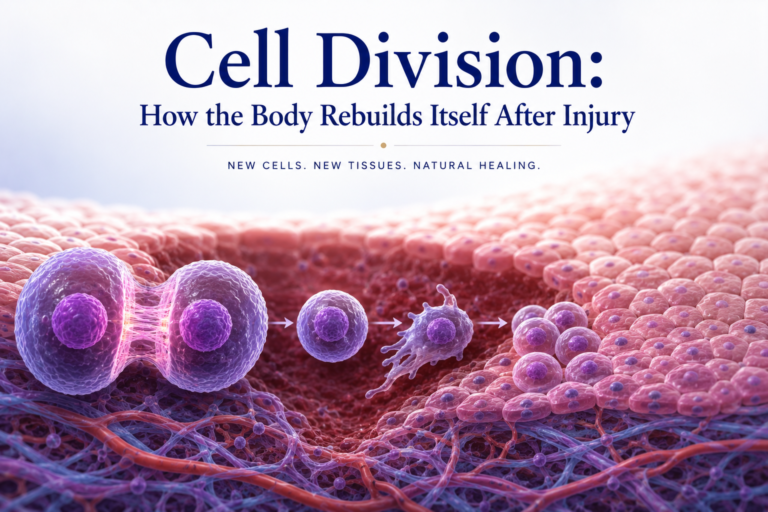
When a muscle fiber is damaged, satellite cells — a type of muscle stem cell located on the surface of muscle fibers — become activated. These cells divide, and some of them fuse with the damaged fiber to donate new nuclei and restore its capacity for protein synthesis. Others give rise to entirely new muscle fibers.
This regenerative process depends on proper gene expression in the satellite cells. Signals triggered by physical therapy exercises — including mechanical loading and metabolic stress — help activate satellite cells and stimulate the gene expression programs needed for muscle regeneration. This is one reason why controlled, progressive exercise is so important in rehabilitation after muscle injuries.
Epigenetics: How Lifestyle Changes Gene Expression
One of the most exciting recent discoveries in biology is that gene expression can be modified without changing the underlying DNA sequence. This field is called epigenetics. Factors like exercise, diet, stress, sleep, and physical therapy can cause chemical modifications to DNA and histones that alter which genes are turned on or off.
Regular physical activity, for example, has been shown to produce epigenetic changes in muscle cells that increase the expression of genes related to mitochondrial function, muscle growth, and anti-inflammatory pathways. These changes can persist long after exercise stops — which partly explains why physically active individuals tend to recover from injuries more quickly and maintain better musculoskeletal health throughout life.
In rehabilitation, this means that the therapeutic exercise programs prescribed by physical therapists are not just building strength in the short term — they are potentially reprogramming the gene expression profile of muscle and connective tissue cells in ways that support long-term health.
DNA Damage and Repair in Physical Therapy
Intense or unaccustomed exercise can cause oxidative stress that damages DNA within muscle cells. This is a normal physiological phenomenon — the body has sophisticated DNA repair mechanisms that fix this damage during recovery. However, if exercise is too intense or recovery is inadequate, DNA damage can accumulate and impair cellular function.
Physical therapists manage this balance through careful exercise prescription. Progressive loading, adequate rest periods, and attention to nutrition and sleep all support the DNA repair processes that are essential for healthy adaptation to exercise.
Conclusion
The cell nucleus and DNA are the ultimate control center of tissue repair and adaptation. Every protein that rebuilds a torn muscle, every collagen fiber that restores a damaged tendon, and every nerve ending that reorganizes after injury is produced according to instructions encoded in the DNA and regulated by the nucleus.
Physical therapy works, in part, by delivering the right mechanical and biochemical signals to cells — signals that reach the nucleus and activate the genetic programs needed for healing. Understanding this process transforms the way we think about rehabilitation: not just as a series of exercises, but as a scientifically grounded intervention that influences biology at the most fundamental level.
References
- Alberts, B., Heald, R., Johnson, A., Morgan, D., Raff, M., Roberts, K., & Walter, P. (2022). Molecular Biology of the Cell (7th ed.). W.W. Norton & Company.
- Ross, M.H., & Pawlina, W. (2020). Histology: A Text and Atlas (8th ed.). Wolters Kluwer.
Disclaimer: This article is for educational purposes only and does not constitute medical advice. Always consult a qualified healthcare professional for personal health concerns.
The site is written and curated by Paul Morgan, a graduate in Physiotherapy (2026), with a particular interest in cardiorespiratory and musculoskeletal physical therapy. Every article on this site is grounded in academic physiology and physical therapy coursework. Content reviewed for clinical accuracy before publishing.